Complete Guide to CEMS Chimney Emissions for Industries
Curious about what is a CEMS system? Discover the importance of CEMS Chimney Emissions to monitor exhaust gas emission standards with Fortuna Argatech.
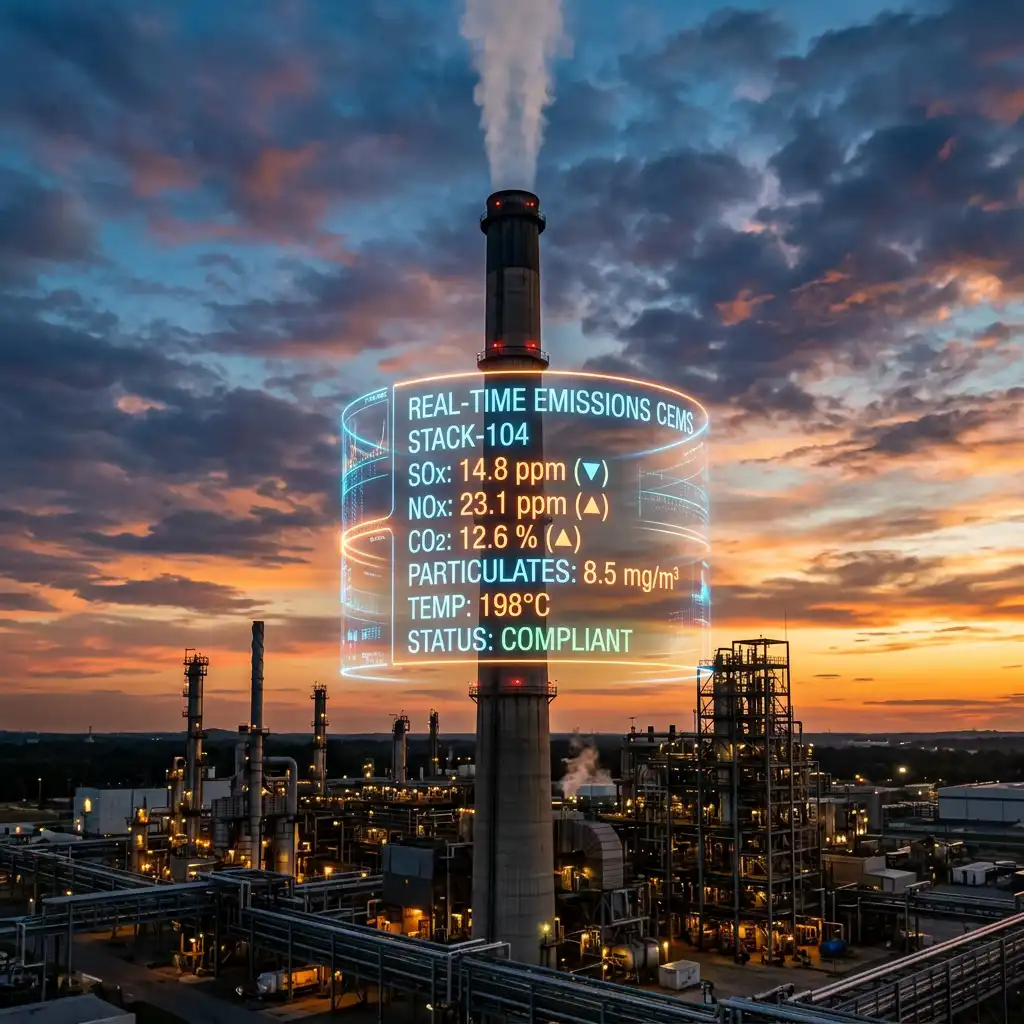
In this modern era, industrial environmental compliance is absolutely non-negotiable, especially under the strict supervision of the Ministry of Environment and Forestry (KLHK). One of the primary obligations for large-scale factories is installing a CEMS Chimney Emissions system. For those of you who are still unfamiliar with what is a CEMS system, this technology acts as the spearhead in monitoring industrial air monitoring and factory air pollution produced by manufacturing processes.
Monitoring exhaust gas emission standards is not just a regulatory formality, but a manifestation of corporate responsibility toward the air we all breathe. By installing the correct environmental tools, you are not only saving nature but also protecting your company from billions of rupiahs in fines.
Let’s discuss in depth why the CEMS Chimney Emissions technology from Fortuna Argatech has become the golden standard for factory emission regulations in Indonesia.
What Exactly is a CEMS System?
CEMS stands for Continuous Emission Monitoring System. Translated literally, this device is an exhaust monitoring system that operates continuously, non-stop, 24/7.
Imagine CEMS as a massive digital stethoscope attached directly to the factory’s smokestack (such as cement factories, coal power plants, or fertilizer plants). This instrument sucks in a tiny fraction of the exhaust gas flowing up the chimney, then analyzes its chemical compounds in mere seconds.
Unlike the AQMS (Air Quality Monitoring System) which measures ambient air in open environments, a CEMS Chimney Emissions system is installed right at the “dragon’s mouth” or the direct source of pollution before the gas mixes with the wind in the open air.
Parameters Monitored by CEMS Chimney Emissions
Every industrial sector produces different waste gases, but KLHK generally mandates the monitoring of the most lethal toxic gases. Integrating SO2 NOx gas sensors is the most commonly required component. Here are some of the main parameters read by a CEMS system:
- SO2 (Sulfur Dioxide): A pungent-smelling gas that is the primary cause of acid rain. Acid rain can destroy house roofs and devastate community crops.
- NOx (Nitrogen Oxides): This gas is formed from high-temperature combustion processes. NOx is a primary trigger for smog, which causes acute respiratory infections.
- Particulates (Fine Dust / PM): Microscopic solid particles (often referred to as opacity) that float out of the chimney. If inhaled, these particles can permanently settle inside human lungs.
- CO (Carbon Monoxide) & CO2 (Carbon Dioxide): Gases heavily linked to the global greenhouse effect and the toxic consequences of incomplete combustion.
Why is Telemetry Integration So Crucial?
In the past, factories were only required to hire external laboratories to test their chimney smoke twice a year. Unfortunately, this manual method opened massive loopholes for cheating. Many unethical factories intentionally lowered their production capacity on the day the lab technicians arrived, so the smoke emitted looked clean and met the quality standards.
KLHK realized this loophole. Therefore, current regulations demand that CEMS Chimney Emissions must be integrated with an online telemetry network called SISPEK (Continuous Industrial Emission Monitoring Information System).
Advanced telemetry systems from Fortuna Argatech allow data from the sensors on top of your factory chimney to be sent every hour, or even every minute, straight to the KLHK servers in Jakarta. If the system detects that your factory smoke is too thick at 2:00 AM, the alarm on KLHK’s supervisory dashboard will blare instantly. There are no more gaps to hide dirty data.
Peace of Mind with Fortuna Argatech
Choosing a vendor to install a CEMS Chimney Emissions system is no trivial matter. Installation on top of a smokestack tens of meters high requires top-tier mechanical, electrical, and IT software expertise.
Fortuna Argatech is here as a local partner providing comprehensive, end-to-end service guarantees. From mounting the sensor probes on hot chimneys and installing the analyzer racks below, to ensuring your factory’s User ID (UID) is successfully connected and registered as LIVE on the KLHK server without a hitch. Ensure the air around your industry stays clean, and your business permits remain perpetually secure!
FAQ
Which industries are required to install CEMS?
Based on PermenLHK, mandatory industries include: Power Plants (PLTU), Cement factories, Iron and Steel smelting, Glass manufacturing, Oil and Gas, up to Pulp & Paper mills.
Where exactly on the chimney is the CEMS sensor installed?
The sensor (called a Probe) is usually not installed at the very top tip of the chimney, but rather in the middle/body of the stack at a height measuring at least 2 to 8 times the diameter of the chimney itself.
What is the maximum temperature a CEMS sensor can withstand?
Industrial-grade CEMS systems are designed with specialized materials (such as heated sample lines) that can endure and process exhaust gases reaching hundreds to thousands of degrees Celsius.
Must CEMS equipment be routinely calibrated?
It is absolutely mandatory. Because it is constantly battered by hot and corrosive gases, the analyzer must be calibrated using “Standard Gas” cylinders every few months to ensure its readings remain pinpoint accurate.
Can Fortuna Argatech handle the data connection to KLHK?
Yes, we provide full-service solutions from pulling fiber optic cables from the chimney down to your factory’s local server, all the way to pushing the JSON API data directly into the KLHK (SISPEK) server gateway.
Sources
- Ministry of Environment and Forestry (KLHK). (n.d.). Continuous Industrial Emission Monitoring Information System (SISPEK).
- Fortuna Argatech. (n.d.). Indonesia CEMS & AQMS Solutions. https://argatech.com
- National Standardization Agency (BSN). Procedures for Measuring Emissions from Stationary Sources.
Share this article
Share this insight with your team.
Related Articles
Similar topics from the same category.
SPARING data completeness thresholds of 85% and 100% aren't in P.93 or P.80, they come from PROPER 2025. Here's what that means for your facility.
P.93/2018 doesn't set a minimum uptime for SPARING. The 85% daily rule and 100% reporting requirement actually come from PROPER. Learn the compliance impact.

Environmental monitoring data retention guide: KLHK regulations, ANRI standards, a 3-layer storage model, and ALCOA+ principles for audit readiness.