4 Wastewater Quality Parameters You Must Monitor
Why are Wastewater Quality Parameters such as pH, COD, and TSS crucial? Learn the KLHK compliance standards so your factory avoids heavy legal penalties.
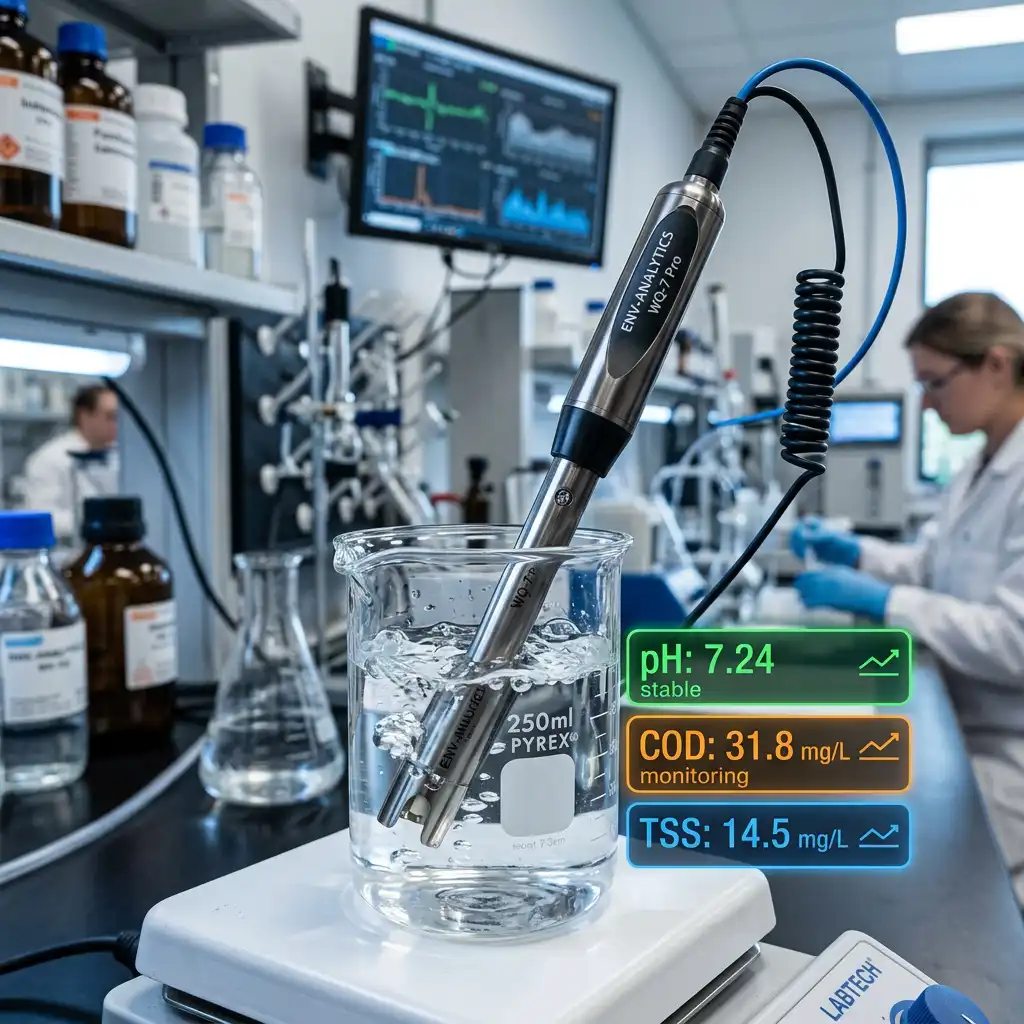
When a textile factory, mining operation, or palm oil mill operates, they generate millions of liters of liquid waste every single day. Before this effluent is discharged into the nearest river, the government, through the Ministry of Environment and Forestry (KLHK), mandates that industries treat it first in a WWTP (Wastewater Treatment Plant).
But how does the government know if that water is genuinely safe? The answer lies in the measurement of Wastewater Quality Parameters.
For factory managers or Health, Safety, and Environment (HSE) practitioners, understanding these chemical and physical indicators is the lifeblood of your company’s legal compliance. If these parameter numbers miss the mark, administrative sanctions up to the revocation of operational permits loom overhead.
Let’s dissect the 4 primary parameters that are strictly required to be monitored using telemetry sensors (such as the SPARING system from Fortuna Argatech), explained in simple terms.
1. pH (Acidity / Alkalinity Level)
You’ve certainly heard the term pH. This parameter measures how acidic or basic your wastewater is on a scale of 0 to 14. A score of 7 means neutral (like regular drinking water).
If your factory’s waste has a very low pH (highly acidic) or a very high pH (highly basic), the effects are extremely destructive to the environment. Excessively acidic waste can dissolve toxic heavy metals on the riverbed and instantly kill small fish, while highly basic waste can destroy aquatic plant tissues. KLHK typically sets the factory waste pH quality standard between 6.0 and 9.0.
2. TSS (Total Suspended Solids / Turbidity)
TSS measures how many solid particles (like fine mud, sand, or organic debris fragments) are floating around in the water. Visually, TSS is the indicator of “how murky or cloudy” your wastewater is.
Why is this turbidity dangerous? Wastewater with high TSS levels blocks sunlight from penetrating deep into the river. Without sunlight, aquatic plants cannot photosynthesize, which leads to a severe drop in underwater oxygen production. Consequently, the river ecosystem will slowly starve and suffocate.
3. COD (Chemical Oxygen Demand)
COD can be considered the “king” of the Wastewater Quality Parameters, and the one most feared by factory managers. COD measures the amount of oxygen required to break down (oxidize) both organic and inorganic chemicals dissolved in the wastewater.
The higher the COD number, the more chemical pollutants exist in the water. If high-COD waste is dumped into a river, those chemicals will aggressively snatch up all the available oxygen in the river. As a result, aquatic life (fish and plankton) will suffocate to death from oxygen deprivation. Lowering the COD number is the primary function and the hardest job of a WWTP system.
4. Wastewater Flow Rate (Debit)
Even if your wastewater is perfectly clean and meets the standards for pH, TSS, and COD, you still aren’t allowed to dump it in limitless quantities. Flow rate measures the volume of wastewater discharged over a specific time (e.g., liters per second or cubic meters per day).
KLHK dictates the maximum volume limit based on your factory’s production scale. If the flow exceeds the permit (overcapacity), it can destroy the receiving river’s carrying capacity and risk triggering toxic downstream floods.
Monitor Your Parameters Automatically with Fortuna Argatech
In the old days, to determine pH and COD numbers, factories had to scoop water samples into bottles and wait days for laboratory results. Today, that method is obsolete and risky.
By adopting Industrial Internet of Things (IIoT) technology, Fortuna Argatech introduces automated submerged sensors capable of reading all the Wastewater Quality Parameters mentioned above directly, in real-time and online. If an anomaly occurs (for instance, a sudden spike in COD), our system will immediately send an instant warning to your smartphone before the hazardous waste flows out the factory gates.
Leave behind the old methods fraught with human error risks. Ensure your factory’s water quality is always monitored safely and perpetually compliant with national regulations!
FAQ
What is the difference between COD and BOD?
BOD (Biochemical Oxygen Demand) measures the oxygen needed by bacteria to break down organic matter, while COD breaks down all materials (both organic and chemical inorganic). COD readings are always higher, and the testing process is significantly faster than BOD.
Why does the pH value of my waste fluctuate constantly?
The pH value of waste is highly influenced by the ongoing production processes (for example, washing raw materials using certain chemical fluids) as well as the effectiveness of neutralizing liquids added in the WWTP ponds.
How does a TSS sensor work?
Generally, industrial-grade TSS sensors utilize optical or infrared technology. The sensor shoots light into the water and then calculates how much of that light bounces back after colliding with floating solid particles.
Do these wastewater parameter sensors require maintenance?
Absolutely. Because they are constantly submerged in dirty water, the sensor probes will accumulate crusts. The device must be cleaned and recalibrated every 1 to 3 months so the readings don’t return errors.
Can one Fortuna Argatech device read all parameters simultaneously?
Yes. Our multi-parameter Data Loggers are sophisticatedly designed to receive inputs from pH, TSS, COD sensors, and flow meters simultaneously, displaying them all on a single unified dashboard.
Sources
- Ministry of Environment and Forestry (KLHK). (n.d.). Industrial Wastewater Quality Standards.
- Fortuna Argatech. (n.d.). Integrated Wastewater Monitoring Services. https://argatech.com
- Environmental Chemistry Education Portal. Understanding Water Pollutant Parameters.
Share this article
Share this insight with your team.
Related Articles
Similar topics from the same category.

SPARING data completeness thresholds of 85% and 100% aren't in P.93 or P.80, they come from PROPER 2025. Here's what that means for your facility.

P.93/2018 doesn't set a minimum uptime for SPARING. The 85% daily rule and 100% reporting requirement actually come from PROPER. Learn the compliance impact.

Indonesia's SPARING mandates 2-minute sampling but ignores sensor T90. Learn the hidden risk of slow NH3-N sensors and using T90 as a fouling indicator.