Mine Water Monitoring Systems: Solutions to Prevent Pit Floods
Learn how the Mine Water Monitoring system from Fortuna Argatech utilizes groundwater level sensors to automatically prevent severe mine flood hazards.
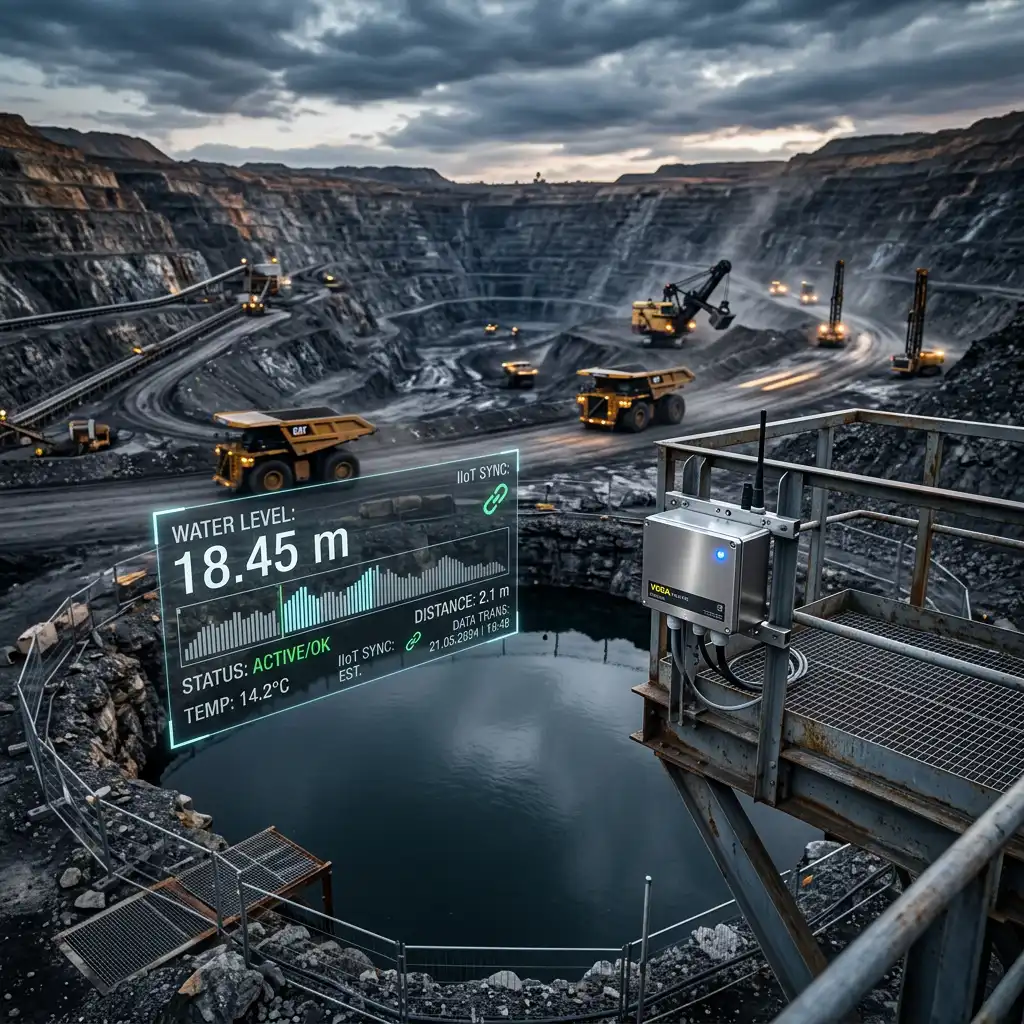
For open-pit mining companies, heavy rainfall and groundwater are among the greatest natural enemies that must be strictly controlled. When precipitation is extremely high, the mine water holding ponds (sump pits) can overflow in a matter of hours. To prevent this, implementing a precise and real-time Mine Water Monitoring system is no longer an optional luxury, but a mandatory operational standard.
Without visibility regarding the groundwater level, the lives of workers and heavy machinery worth billions of rupiahs could be threatened by sudden mud and mine flood hazards. Furthermore, safety regulations from the Ministry of Energy and Mineral Resources (ESDM) mandate every mining company to enforce strict water risk mitigation procedures.
As experts in Industrial Internet of Things (IIoT) solutions, Fortuna Argatech understands profoundly how vital this Mine Water Monitoring truly is. Let’s explore how groundwater level sensors can revolutionize the way mining engineers make dewatering decisions.
Flood Threats in Open-Pit Areas
An open-pit mine is essentially a massive basin that catches whatever falls from the sky. The water that accumulates at the bottom of the pit comes from two main sources: rainwater run-off and groundwater seepage.
If the sump pit (temporary containment pond) is not pumped out in time, the water will submerge the hauling roads and drilling areas. The worst consequences include:
- Operational Downtime: Heavy-duty dump trucks cannot operate on flooded, slippery mud roads. Losses from halted production can reach billions of rupiahs per single day.
- Safety Risks (HSE): Heavy machinery like excavators can get trapped or drown entirely. Even more fatally, water-saturated highwall slopes are highly susceptible to deadly landslides.
This is exactly where Mine Water Monitoring acts as the primary eyes for the mine manager.
Groundwater Level Sensor Technology
To determine exactly when the dewatering pumps must be activated, the engineering team relies on groundwater level sensors. Fortuna Argatech’s advanced telemetry systems deploy non-contact radar or ultrasonic sensors that shoot beams directly onto the surface of the sump water.
This non-contact method is highly ideal for mining environments because the sensors will not be degraded by the highly acidic nature of mine water (Acid Mine Drainage) or blinded by thick, corrosive mud.
Data regarding these water level changes is recorded every minute and transmitted via wireless signals (radio telemetry, GSM, or satellite) directly to the control room.
Achieving Automatic Dewatering Systems
The greatest benefit of an IIoT-based Mine Water Monitoring framework is its ability to integrate into full automatic dewatering systems.
When the sensor detects that the water volume in the sump pit has reached the Alert 1 boundary, the Fortuna Argatech data logger can be programmed to send a direct relay command to the pump’s electrical panel. The giant pump engines will power on automatically to discharge the water and will shut themselves off once the water has receded to a safe limit.
This entirely eliminates the dangerous reliance on manual human checks, which are frequently performed too late—especially during the night or amid severe weather conditions.
A Smart Investment for Mining Occupational Safety HSE
In the extractive industries, mining occupational safety HSE is a priority that simply cannot be compromised. Relying on manual monitoring methods by reading a measuring pole at the bottom of a dark pit is highly risky and inefficient.
By adopting automated solutions from Fortuna Argatech, mine planners and dewatering engineers can seamlessly monitor water elevations straight from their laptop screens, regardless of where they are. Ensure your pit area is always dry, perfectly safe for heavy machinery operations, and completely secure from the devastating threat of floods.
FAQ
What is a dewatering system in mining?
Dewatering is the process of pumping and discharging stagnant water inside the mine pit to the outside area, ensuring that excavation and material hauling activities can proceed smoothly.
Why not just use a standard floating (submersible) sensor?
Water in mine sump ponds usually contains dense mud and is highly acidic (Acid Mine Drainage). Standard float sensors or submersible probes will quickly rust, jam, or get completely clogged by mud within weeks.
How does Fortuna Argatech equipment get electricity at the bottom of the pit?
Our data logger modules and sensors operate entirely independently (off-grid) using power supplied by Solar Panels, thus eliminating the need to drag long power cables from a diesel generator.
Can the sensor data be viewed directly on a smartphone?
Yes. Fortuna Argatech’s telemetry system is connected to a cloud server (IoT Platform). Field supervisors can view water level graphs and receive early warning notifications via WhatsApp or email right on their smartphones.
Can this sensor be connected to an alarm siren?
Absolutely. If the water reaches a critical overflow danger threshold, the system can automatically trigger loud sirens and rotary lights in the pit area as a direct command for heavy machinery to evacuate.
Sources
- Ministry of Energy and Mineral Resources of the Republic of Indonesia. (n.d.). ESDM Ministerial Decree regarding Mining Safety.
- Fortuna Argatech. (n.d.). IIoT and Water Monitoring Solutions. https://argatech.com
- Journal of Mining Engineering. Evaluation of Mine Dewatering Systems.
Share this article
Share this insight with your team.
Related Articles
Similar topics from the same category.
Compare multiparameter sensor probes and single-parameter sensors on flexibility, maintenance, cabling, replacement cost, and regulatory fit.
Guide to choosing submersible, flow cell, or bypass installation for online water quality sensors based on sensor type and site conditions.
Trace differences between online and laboratory data through six checks covering method, timing, samples, sensor condition, data processing, and acceptance.