The Importance of Environmental Sensor Calibration for Compliance
Why is calibrating environmental sensors like SPARING and ONLIMO so crucial? Read this guide from Fortuna Argatech to keep your industry free from KLHK penalties.
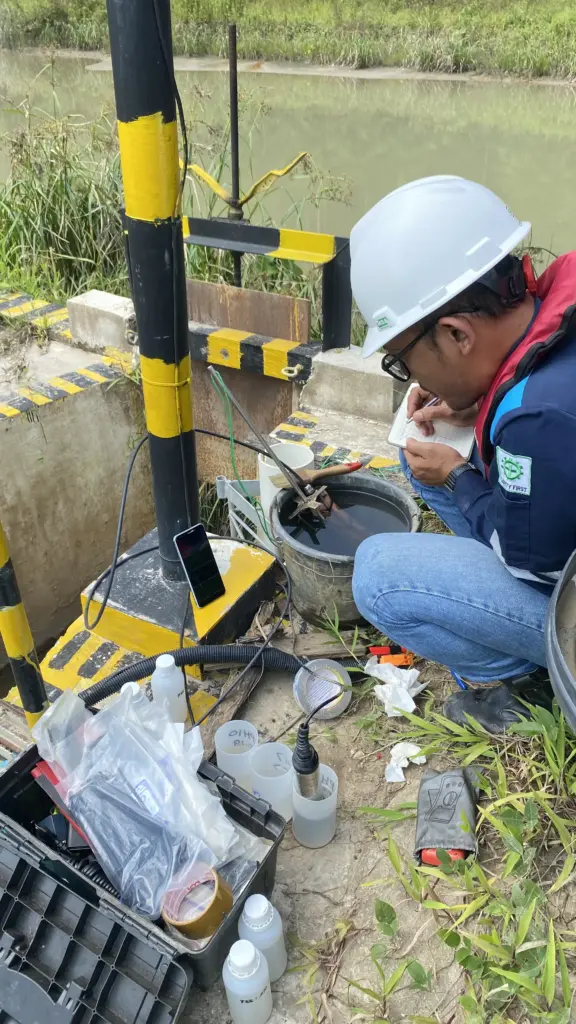
Installing an environmental monitoring system like SPARING or ONLIMO in your factory is an excellent first step. However, many industrial companies forget that the work does not end once the machine is turned on. There is one crucial stage that determines whether your data is legally valid in the eyes of environmental law: Environmental Sensor Calibration (Kalibrasi Sensor Lingkungan).
As an official environmental technology provider registered with the Ministry of Environment and Forestry (KLHK), Fortuna Argatech frequently encounters companies panicking because their sensor data suddenly plummets or becomes unreadable by the central server. Ultimately, they end up receiving warning letters from the ministry.
So, what exactly is calibration, and why is it the lifeline of environmental compliance? Let’s break it down in simple terms.
What is Sensor Calibration?
Imagine you have a bathroom scale. If every day that scale is kicked, moved around, or covered in dust, eventually its needle won’t point precisely to zero anymore. The exact same thing happens to environmental sensors.
Environmental sensor calibration is the process of restoring a sensor’s accuracy level (such as pH, TSS, or COD sensors) back to its original measurement standards. These sensors work day and night, submersing themselves in wastewater or rivers full of chemical sediments. As time passes, the tip of the sensor probe will get dirty, experience wear and tear, or suffer from measurement value shifts (drifting). Through calibration, we ensure that the numbers being transmitted to the KLHK servers are absolutely accurate.
The Dangers of Neglecting Routine Maintenance
Systems like SPARING (Continuous Industrial Wastewater Quality Monitoring System) are mandated by KLHK to oversee industrial operations so they don’t pollute nature. If you ignore maintenance and calibration, there are several fatal risks lurking:
- Invalid Data (False Alarms): A dirty sensor might read ammonia levels as exceeding the threshold, even when your wastewater is actually clean. This triggers a false alarm in the KLHK system and could potentially invite a sudden inspection of your factory.
- Administrative Sanctions: KLHK requires companies to report maintenance logs periodically. Failure to provide accurate data can lead to written warnings and even the suspension of environmental permits.
- Premature Equipment Failure: Industrial-grade sensors are not cheap. Cleaning the equipment routinely will extend its lifespan for years. If left to crust over, the sensor could die completely, forcing you to pay expensive replacement costs.
Maintenance Solutions from Fortuna Argatech
Fortuna Argatech doesn’t just sell and install equipment; we also provide comprehensive after-sales services. We have a team of certified technicians ready to go into the field to perform:
- Sensor Cleaning: Lifting the sensor out of the water, cleaning off algae and chemical crusts using special solutions so the reading probe becomes sensitive again.
- Standard Liquid Calibration: Our technicians will dip the sensor into internationally standardized buffer liquids. If the reading is off, the system will be reset until it returns to 100% precision.
- Telemetry Network Checking: Besides sensors, we also inspect the data logger, solar panels, and modem signal strength so data transmission to the government server doesn’t suffer from delays or disconnections.
Routine maintenance is not a burden of cost; rather, it is a legal protection investment for your company. Do not wait until the sensor dies or you receive a warning letter. Schedule regular calibration and let the system run quietly in the background while you focus on running your core business.
FAQ
How often should a SPARING sensor be calibrated?
Generally, light cleaning is recommended once a month, while a thorough calibration using standard buffer liquids should be done every 3 to 6 months.
Can I calibrate it myself?
The calibration process requires specific buffer liquids and access to the fairly complex data logger system. It is highly recommended to use official technician services like Fortuna Argatech to avoid damaging the equipment.
What happens if my sensor data gets disconnected from KLHK?
If disconnected, you are usually required to immediately report it to KLHK and fix the connection within a certain time limit so you are not suspected of hiding violation data.
Does Fortuna Argatech’s maintenance service include spare parts replacement?
Yes, if worn or broken components (like corroded cables or dead sensors) are found during inspection, our team will directly recommend a replacement.
Can Fortuna Argatech maintain third-party brand sensors?
Our technician team has experience handling various protocols and brands of industrial sensors. However, an initial survey is still required to confirm system compatibility.
Sources
- Ministry of Environment and Forestry (KLHK). (n.d.). Technical Guidelines for SPARING Installation and Maintenance.
- Fortuna Argatech. (n.d.). Telemetry Maintenance and Calibration Services. https://argatech.com
Share this article
Share this insight with your team.
Related Articles
Similar topics from the same category.

SPARING data completeness thresholds of 85% and 100% aren't in P.93 or P.80, they come from PROPER 2025. Here's what that means for your facility.

P.93/2018 doesn't set a minimum uptime for SPARING. The 85% daily rule and 100% reporting requirement actually come from PROPER. Learn the compliance impact.

Indonesia's SPARING mandates 2-minute sampling but ignores sensor T90. Learn the hidden risk of slow NH3-N sensors and using T90 as a fouling indicator.