7 Steps to Transition from Manual to Automated Environmental Monitoring
Still using grab sampling? Learn 7 steps to migrate from manual to automated monitoring under Indonesia’s SPARING and CEMS rules.
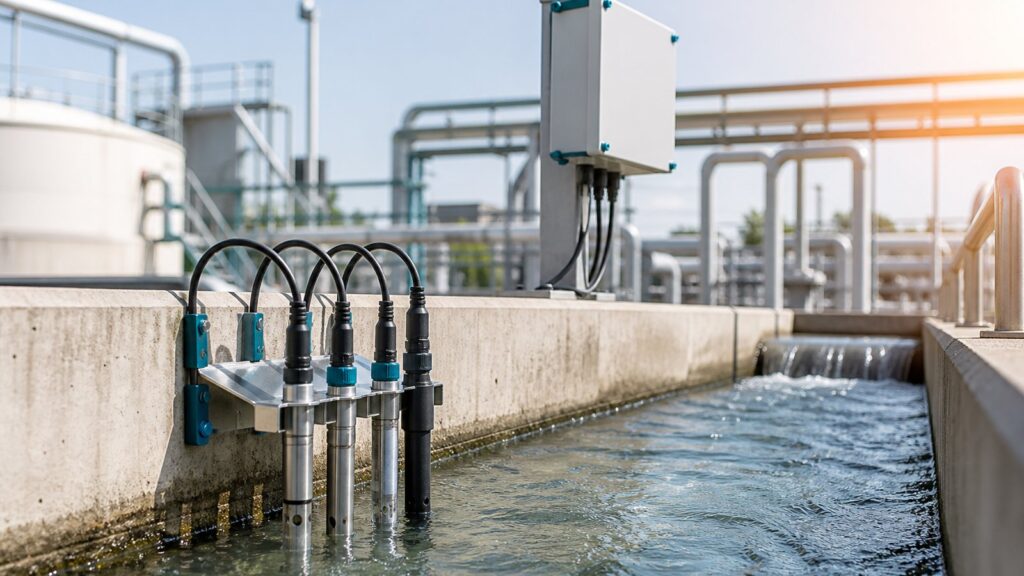
If your facility still relies on monthly grab sampling for environmental compliance, the regulatory window in Indonesia has closed. PermenLHK P.93/2018, as amended by P.80/2019, mandates continuous online wastewater monitoring (SPARING) for 12 industrial sectors. PermenLHK 13/2021 requires continuous emission monitoring (CEMS) connected to the Ministry’s SISPEK platform for 10 emission sectors. These are not future targets. The deadlines have passed, enforcement is active, and we have seen companies get caught off guard by assuming the rules would not be enforced. The transition from manual to automated monitoring is no longer optional for companies operating in regulated Indonesian industries.
This article walks through the practical steps for migrating from grab sampling to continuous online monitoring, based on WMO-validated transition frameworks and Indonesian regulatory requirements. We cover what the regulations actually require and what you lose by staying manual, plus a 7-step process for making the switch. If you have been putting this off, the enforcement numbers in the section below should change your mind.
Indonesian Regulations That Mandate Online Monitoring
Two parallel regulatory tracks now require continuous automated monitoring in Indonesia:
Wastewater (SPARING): PermenLHK P.80/2019 identifies 12 mandatory industry types that must install SPARING systems measuring pH, COD, TSS, ammonia, and flow rate continuously. Data transmits directly to KLHK’s SPARING portal. If you are unsure whether your industry falls under this mandate, check your SPARING obligation here.
Emissions (CEMS-SISPEK): PermenLHK 13/2021 mandates 10 emission sectors to install CEMS connected to KLHK’s SISPEK platform. The deadline was 1 January 2023. CEMS data is acquired every 5 minutes by a Data Acquisition System (DAS) and transmitted to SISPEK via the Data Integration System.
PP 22/2021 strengthens both tracks with a graduated sanctions framework under Pasal 130 and 508-516. This is the legal backbone. Companies that fail to install and connect face administrative sanctions that escalate from written warnings to operational suspension, and eventually to permit revocation. In our experience, most companies do not take the escalation seriously until they receive that first written warning.
What Monthly Grab Sampling Actually Misses
The fundamental problem with manual sampling is data resolution. Grab sampling yields 1-4 data points per month. Compare that to an online sensor recording at 5-minute intervals, which produces more than 8,640 data points per month from a single parameter. Those are not numbers in the same category.
Manual sampling results take 3-14 days to return from the laboratory. During that window, exceedance events come and go undetected, and nobody at the facility knows about them. A Brantas River monitoring study found that manual sampling had frequencies well below international recommendations. The study pointed to limited sampling points and dependence on distant central laboratories as factors that reduced both accuracy and timeliness. Transient pollution events, the kind that trigger regulatory violations, are invisible to monthly grab sampling. We have seen companies receive sanctions for exceedance events that lasted less than 48 hours, events their monthly sampling never captured.

Literature review data from IoT-SPARING implementations in the mining sector showed a 90% improvement in reporting compliance and up to 30% fewer administrative violations among companies using continuous monitoring systems. These figures come from a literature review (based on Impron & Sutriani, 2022), not a national survey, so take them as directional rather than definitive. But they do illustrate the compliance gap between manual and automated approaches.
Enforcement Is Not Hypothetical: 2025 Data
As of September 2025, the Indonesian Ministry of Environment (KLH) supervised 921 companies and imposed administrative sanctions on 845 of them. Read that ratio again: 845 out of 921. Of the remainder, 39 cases were referred for criminal investigation and 16 went to regional authorities. Another 18 entered dispute resolution. Only 24 companies were found compliant. Environmental dispute settlements generated Rp 175.7 billion in non-tax state revenue (PNBP), exceeding the Rp 92 billion target.
Sanctions escalate through a defined pathway: written warning, then administrative fines, then temporary operational suspension, and finally permit revocation. Non-compliance also affects a company’s PROPER environmental rating (pushing toward Red or Black) and has downstream consequences for ESG reporting and OSS-RBA licensing prerequisites.
Delaying the transition from manual to automated monitoring does not reduce exposure. Every month without continuous data is another month of undetected exceedances piling up in your compliance history.
The 7-Step Transition Process
The following roadmap draws from SPARING installation phases documented by Sucofindo and validated against WMO transition management principles. WMO IOM Report No. 65 recommends a parallel operation period when transitioning from manual to automatic monitoring. The Molineaux (2010) 8-element checklist for network transition management covers change management, responsibilities, cost planning, parallel testing, metadata handling, data quality assurance, user needs assessment, and data access protocols. We have adapted both frameworks to Indonesian SPARING and CEMS requirements.
Step 1: Site Survey
Before anything else, assess the physical location where sensors will be installed. You need to evaluate water flow or stack access, power availability, and connectivity. Environmental exposure matters too, especially in tropical conditions where enclosure temperature can affect sensor drift. Skipping this step, or doing it superficially, is the single most common reason we see projects go over budget. A thorough site survey covering 8 critical checks prevents costly rework after installation begins.
Step 2: Procurement and Equipment Selection
Select sensors, data loggers, and telemetry hardware matched to the parameters your regulation requires. For SPARING, that means pH, COD, TSS, ammonia, and flow rate. For CEMS, the relevant emission parameters for your sector. All equipment must be compatible with KLHK’s data transmission protocols, and this compatibility issue trips up more procurement teams than you would expect.
Step 3: Installation
Mount sensors, wire data loggers, and install enclosures. Establish power and communication infrastructure separately, because those are the components most likely to fail first. Installation quality directly determines long-term sensor performance and maintenance burden. Poorly routed cabling or inadequate weatherproofing will cost you more in the first year of maintenance than the original installation saved.
Step 4: Commissioning
Verify that every sensor reads within acceptable accuracy and that the data logger records and transmits correctly. Then test the full data chain from sensor to KLHK portal end-to-end. A structured commissioning checklist reduces the risk of post-installation failures. In our experience, commissioning catches about one in three installations that would have failed their first KLHK data validation.
Step 5: KLHK UID Activation
Register the monitoring system with KLHK and activate the Unique Identifier (UID) that links your station to the SPARING or SISPEK platform. This is the step where your data stream becomes officially visible to the regulator.
For CEMS-SISPEK integration, the process follows five stages per PermenLHK 13/2021: Registration, Administrative Data, Technical Data, Verification, and Connectivity Testing.
Step 6: Operator Training
This step gets underestimated more than any other. Train site personnel on daily checks and basic troubleshooting. Data validation and preventive maintenance procedures need separate, dedicated training sessions. WMO guidance explicitly warns about training gaps as a common failure point in monitoring transitions, and Sabatini (2017) identified the training gap as one of four primary causes of unsuccessful transitions from conventional to automatic monitoring. The best hardware in the world produces bad data if the operator does not know how to maintain it.
Step 7: Parallel Operation and Validation
Run the automated system alongside manual sampling for a defined validation period. WMO recommends maintaining parallel operation to validate automated system accuracy before discontinuing manual measurements. This is not redundancy; it is the evidence base that your new system produces defensible data. Companies that skip this step tend to discover data quality problems only after the regulator flags them, which is the worst possible time.
PT Indocement successfully connected 10 plants and 1 turbine to KLHK’s SISPEK platform over the 2018-2022 period, showing that large-scale CEMS-SISPEK integration is achievable but requires multi-year planning for complex facilities.
Cost Structure: Global Benchmarks and Field Realities
No peer-reviewed Indonesian study currently provides automated monitoring ROI in Rupiah, so cost projections for Indonesian installations should be developed through site-specific quotations rather than generalized figures. We are honest about this because the wrong benchmark can be worse than no benchmark.
For reference, US benchmark data shows the following 3-year total cost of ownership for 10 monitoring sites: manual monitoring at approximately USD 296,000 versus automated monitoring at approximately USD 105,200. The average payback period was 14 months, with Year 2-3 savings of approximately USD 87,000 per year.
These are US benchmarks and should not be applied directly to Indonesian conditions, where labor costs, equipment import duties, and site logistics differ substantially. However, the underlying cost pattern (high recurring labor and laboratory costs for manual sampling versus front-loaded capital expenditure with lower ongoing costs for automated systems) is structurally similar across markets. The direction of the savings holds, even if the exact ratios do not translate.
Next Steps
If your company operates in one of the 12 SPARING-mandatory or 10 CEMS-mandatory sectors, the question is not whether to transition but how quickly you can execute it.
- Verify your regulatory obligation. Confirm whether your industry and discharge volume place you under SPARING or CEMS mandates. Check your applicability here.
- Schedule a site survey. Every installation starts with understanding the physical site conditions: flow points, power access, connectivity, and environmental exposure.
- Engage a certified provider. Fortuna Argatech holds SPARING certification (SK KT.23/PPA/PSPA/PKL.2.11/B/07/2024) from KLHK and is listed on the official SPARING provider registry. A certified provider handles the full chain from site survey through KLHK activation and post-installation support.
The regulatory mandate is set and enforcement is active. The remaining variable is how quickly your company completes the transition from manual to automated monitoring.
Sources
- PermenLHK P.93/MENLHK/SETJEN/KUM.1/8/2018 — SPARING mandate, BPK RI / KLHK, 2018.
- PermenLHK P.80/2019 — SPARING amendment (12 sectors, 5 parameters), PPKL KLHK, 2019.
- PP No. 22 Tahun 2021 — Environmental monitoring sanctions framework, BPK RI, 2021.
- PermenLHK No. 13 Tahun 2021 — CEMS-SISPEK mandate (10 sectors), BPK RI, 2021.
- KLH enforcement press release SR.229/HUMAS/KLH-BPLH/9/2025 — 921 companies supervised, 845 sanctioned, kemenlh.go.id, September 2025.
- WMO IOM Report No. 65: Guidance on AWS and Implementation — Parallel operation framework, WMO, 1997.
- Sabatini, F. (2017). Challenges in Transition from Conventional to Automatic. In Perspectives on Atmospheric Sciences, Springer.
- Molineaux, B. (2010). 8-element checklist for network transition management, cited in Sabatini 2017.
- Indocement SISPEK integration — 10 plants + 1 turbine, indocement.co.id, 2022.
- Rivaldi Rizky & Rahayu (2025). Brantas River manual monitoring study, USRAH Vol 6 No 2.
- IoT-SPARING effectiveness in mining — Djtechno journal, Dharmawangsa, 2025.
- Real-Time vs Manual Water Quality Monitoring — TCO benchmarks (US), WizSensor, 2026.
- Sucofindo SPARING booklet — SPARING installation phases, 2023.
- SPARING, Fortuna Argatech.
Share this article
Share this insight with your team.
Related Articles
Similar topics from the same category.

Poor weather station placement can cause 50% data bias. Learn the WMO-No. 8 and Indonesian BMKG siting standards for AWS sensors in industrial and mining sites.

Explore a technical engineering comparison between solid-state ultrasonic anemometers and mechanical cup-and-vane sensors for industrial weather stations.

Technical guide to conductivity sensors: comparing toroidal (inductive), 2-electrode, and 4-electrode contacting probes for industrial water and wastewater.