Mandatory SPARING Industries in Indonesia: How to Check Applicability
Check Indonesia's 12 mandatory SPARING categories, sector parameters, compliance points, and manual monitoring duties under P.93/2018 and P.80/2019.
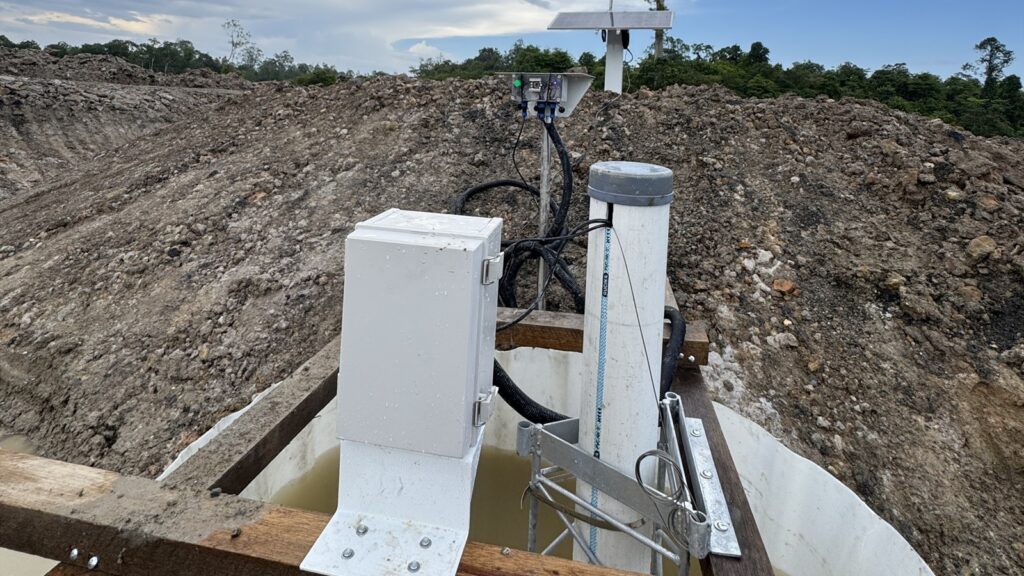
Not every factory in Indonesia is automatically required to install SPARING. A proper applicability review starts with the business or activity categories named in the regulation, then checks the site’s actual processes, wastewater flow where specified, monitoring parameters, and designated compliance points.
The main legal references are Minister of Environment and Forestry Regulation P.93/2018, as amended by P.80/2019. When checked on 23 July 2026, Indonesia’s BPK regulatory database marked both regulations as in force and identified P.80/2019 as an amendment to P.93/2018.
This guide is designed for EHS, environmental, legal, plant-management, and procurement teams conducting an initial screen. A final determination should still be checked against the facility’s environmental documents and current instructions from the competent authority.
The Short Answer: The Amended Rule Lists 12 Categories
The amended Article 2 in P.80/2019 lists 12 types of business and/or activity required to install and operate SPARING. Annex II of the same regulation assigns the monitoring parameters for each category.
| No. | Official business or activity category | SPARING parameters under Annex II |
|---|---|---|
| 1 | Rayon Industry (Industri Rayon) | pH, COD, TSS, flow |
| 2 | Pulp and/or Paper Industry (Industri Pulp dan/atau Kertas) | pH, COD, TSS, flow |
| 3 | Upstream Petrochemical Industry (Industri Petrokimia Hulu) | pH, COD, TSS, flow |
| 4 | Basic Oleochemical Industry (Industri Oleokimia Dasar) | pH, COD, TSS, NH3-N, flow |
| 5 | Palm Oil Industry (Industri Minyak Sawit) | pH, COD, TSS, flow |
| 6 | Petroleum Processing (Pengolahan Minyak Bumi) | pH, COD, NH3-N, flow |
| 7 | Oil and Gas Exploration and Production (Eksplorasi dan Produksi Minyak dan Gas) | pH, COD, NH3-N, flow* |
| 8 | Gold and Copper Mining (Pertambangan Emas dan Tembaga) | pH, TSS, flow |
| 9 | Coal Mining (Pertambangan Batubara) | pH, TSS, flow |
| 10 | Textile Industry (Industri Tekstil) | pH, COD, TSS, NH3-N, flow |
| 11 | Nickel Mining (Pertambangan Nikel) | pH, TSS, flow |
| 12 | Industrial Estate (Kawasan Industri) | pH, COD, TSS, NH3-N, flow |
* For oil and gas exploration and production, Annex II states that the row applies to produced water from onshore oil and gas production.
The categories and parameter mapping come directly from the full text of P.80/2019. Parameters should not be generalized across sectors. Coal mining, for example, lists pH, TSS, and flow, but its row does not list COD or NH3-N.
Why Do Some Sources Still Refer to 14 Industries?
The original P.93/2018 list contained 14 categories. P.80/2019 replaced Article 2(2) with a 12-category list. Two important changes are visible when the texts are compared:
- Pulp and paper, originally listed separately, are combined as Pulp and/or Paper Industry.
- Fertilizer Industry is not included in the amended 12-category list.
An older 14-industry list should therefore not be treated as the current list without reading the amendment. At the same time, absence from the SPARING list does not remove other wastewater monitoring or management duties that may arise under environmental approvals, technical approvals, sector effluent standards, or facility-specific conditions.
A Five-Step SPARING Applicability Check
Use the following process as an initial compliance screen.
1. Match the Actual Process to the Regulatory Definition
Do not rely only on a company name, group name, or broad marketing description. P.80/2019 defines the covered activities, including rayon, pulp and/or paper, upstream petrochemicals, basic oleochemicals, palm oil, petroleum processing, mining, textiles, and industrial estates.
Business registration and KBLI classifications may help with the review, but the team should also examine the production flow, wastewater sources, environmental approval, and technical approval. The objective is to match the actual operation at the site to the regulatory definition.
2. Check Thresholds and Special Notes
P.80/2019 defines Textile Industry as activities producing fibers or fabric through spinning, weaving, knitting, dyeing, printing, and finishing, with a flow of at least 1,000 m3/day.
That 1,000 m3/day threshold forms part of the textile definition in this regulation. It should not be automatically applied to other categories. Oil and gas exploration and production also carries the Annex II note concerning produced water from onshore operations.
3. Verify the Compliance Point
Article 5 of P.93/2018 requires the SPARING instrument to be installed at a location designated as a compliance point. Where a facility has more than one compliance point, the provision refers to the point with the largest pollution load, or one selected where the loads are equal.
The decision is therefore more than an installation-convenience question. Review the wastewater flow diagram, discharge points, flow and pollution-load data, coordinates, and the points approved in the facility’s documents before finalizing the location.
4. Map the Sector-Specific Parameters
Use Annex II of P.80/2019 as the starting point, then compare it with the facility’s environmental documents and applicable effluent requirements. Sensor configuration should reflect the parameters that apply to the operation, not a generic package used for every site.
Article 3 of P.93/2018 also makes clear that SPARING is not a single sensor. It includes the SPARING monitoring instrument, a data logger that records, stores, and transmits data, and a data center that receives and processes monitoring results.
For a broader technical introduction, see how SPARING works and why wastewater monitoring matters before selecting a configuration.
5. Confirm Operating and Reporting Requirements
Review the applicable connectivity, data validity, measurement frequency, maintenance, calibration, and reporting requirements. The current government application is reachable through the Ministry of Environment SPARING portal, but access to the portal alone does not prove that a facility’s configuration, data, or compliance position has been approved.
For a final decision, confirm the assessment with the facility’s responsible environmental personnel and the authority responsible for its approvals or supervision.
Does SPARING Replace Manual Monitoring?
Not entirely. Article 10 in the full text of P.93/2018 retains manual monitoring for:
- parameters that are not monitored continuously;
- compliance points where no SPARING instrument is installed; and
- SPARING parameters when the instrument is damaged and cannot be used under the timing conditions stated in that article.
For the first two cases, P.93/2018 specifies monthly manual monitoring. For the equipment-damage case described in Article 10(1)(c), it specifies weekly monitoring. This should not be read as permission to leave equipment out of service; the regulation also requires periodic maintenance and fitness testing.
Information to Prepare Before System Selection
Before requesting a proposal or choosing equipment, prepare at least:
- the site’s production process and activity classification;
- environmental approvals, technical approvals, and compliance-point documents;
- a flow diagram covering wastewater sources, treatment, and discharge;
- the compliance points, coordinates, flow data, and pollution-load information;
- parameters required for the sector and the facility;
- channel conditions, installation space, maintenance access, power, and communications; and
- an operating, data-review, calibration, maintenance, and manual-monitoring plan.
This package helps avoid two common errors: buying sensors that do not match the required parameters and selecting an installation point before its compliance basis is clear.
Where Fortuna Argatech Fits
Fortuna Argatech provides a SPARING solution for continuous, networked wastewater monitoring. An appropriate configuration should begin with the category, parameters, compliance point, site conditions, and data-integration requirements established during the review.
Equipment alone does not guarantee compliance. The outcome also depends on correct placement, connectivity, operation, data quality, maintenance, calibration, reporting, and any manual monitoring that remains required.
Discuss the Site Assessment
Once the activity category, preliminary parameter set, and compliance points have been identified, contact Fortuna Argatech with the relevant facility documents and site data. The technical discussion can then focus on the actual monitoring requirement rather than assuming one configuration fits every industry.
FAQ
Is every factory in Indonesia required to install SPARING?
No. The initial screen uses the 12 categories and definitions in P.80/2019. The final position should also account for the facility’s actual processes, environmental documents, compliance points, and current authority instructions.
Does the current list contain 12 or 14 categories?
Use the 12-category list in P.80/2019 when reading P.93/2018 as amended. As of 23 July 2026, the BPK regulatory database marked both P.93/2018 and P.80/2019 as in force.
Is every textile facility covered?
P.80/2019 refers to spinning, weaving, knitting, dyeing, printing, and finishing with a flow of at least 1,000 m3/day. The facility’s actual processes and flow should be checked against this definition and its applicable environmental documents.
Which parameters must be monitored?
The parameters follow the sector mapping in Annex II of P.80/2019 and any other requirements applying to the facility. The combinations use pH, COD, TSS, NH3-N, and flow, but not every sector has the same combination.
Does SPARING remove the need for manual laboratory monitoring?
No. Article 10 of P.93/2018 retains manual monitoring for parameters or points not covered by continuous monitoring and for specified equipment-damage conditions.
Sources
- Indonesia’s BPK Regulatory Database. Minister of Environment and Forestry Regulation No. 93 of 2018, issued 31 August 2018.
- Indonesia’s BPK Regulatory Database. Minister of Environment and Forestry Regulation No. 80 of 2019, issued 18 October 2019.
- Ministry of Environment and Forestry. P.93/MENLHK/SETJEN/KUM.1/8/2018, full Indonesian text.
- Ministry of Environment and Forestry. P.80/MENLHK/SETJEN/KUM.1/10/2019, full Indonesian text.
- Ministry of Environment. SPARING portal.
- Fortuna Argatech. SPARING.
Share this article
Share this insight with your team.
Related Articles
Similar topics from the same category.

Poor weather station placement can cause 50% data bias. Learn the WMO-No. 8 and Indonesian BMKG siting standards for AWS sensors in industrial and mining sites.

Explore a technical engineering comparison between solid-state ultrasonic anemometers and mechanical cup-and-vane sensors for industrial weather stations.

Technical guide to conductivity sensors: comparing toroidal (inductive), 2-electrode, and 4-electrode contacting probes for industrial water and wastewater.