Alarm Threshold Configuration: What Value Should You Actually Set?
Thresholds too close to normal operation flood operators with noise; too far and the alarm arrives after compliance is lost. Learn the four-input method.
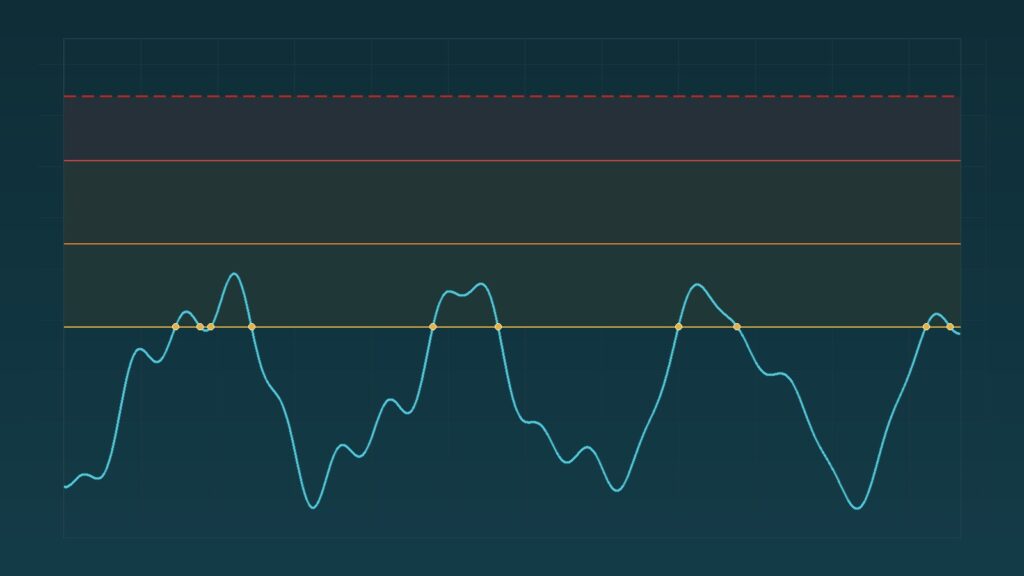
Set an alarm threshold too tight and operators get constant notifications they learn to ignore. Set it too loose and the alarm fires after the parameter already blew past the regulatory limit, leaving zero time to respond. Both failures come from the same gap: nobody worked out what the threshold value should actually be.
This article covers that upstream decision. The companion article on alarm chatter, deadband, and delay picks up after you’ve chosen a threshold and the alarm still won’t stop cycling. Here, we’re focused on deriving the right number in the first place.
Why Thresholds Fail Before They Ever Trigger
ISA-18.2 defines an alarm as a condition requiring timely operator response. If a threshold crossing doesn’t require action, it’s just a notification. It eats attention without producing a decision.
EEMUA 191 benchmarks a well-managed system at roughly one alarm per ten minutes during steady state. I’ve seen a wastewater station logging over 200 alarms a day because someone set the pH threshold at 6.9 when normal operation sat between 6.7 and 6.8. The problem wasn’t the data. The problem was threshold values nobody checked against how the process actually behaves.
Alarm flooding usually starts with thresholds parked too close to normal operating values, too many alarm points with no prioritization, or both. Before you reach for deadband or delay settings, ask a simpler question: does the threshold value itself need to change?
Four Inputs That Determine a Meaningful Threshold
No single number works everywhere. A good alarm threshold draws from four connected inputs.
Regulatory Limits: Starting Points, Not Final Values
Compliance boundaries (effluent quality standards, ambient air limits, water quality criteria) define where a violation begins. But setting the alarm right at the regulatory limit gives you no margin. None for response time, sensor lag, or process dynamics.
Think of the regulatory limit as the first input, not the only one. Your alarm threshold needs enough distance from that boundary so operators can still investigate and act before the parameter crosses into violation. How much distance? That depends on the next three inputs.
For regulatory-monitored systems like SPARING for wastewater compliance or AQMS for air quality, the regulatory limit is always your reference. An alarm that only fires after the limit is already exceeded gives you nothing to work with.
EPA’s ambient monitoring QA framework uses action and alert levels tied to the measurement purpose. Alarm thresholds should serve operational objectives, not just mirror the compliance number.
Baseline Characterization and Normal Operating Range
Collect baseline data before you set thresholds. That’s how you tell the difference between a genuine excursion and routine variation. Normal operating ranges shift by location, season, and process conditions. A single threshold rarely fits every monitoring point for the same parameter.
The practical step: run the station for a representative period and map out the range during normal operation. A threshold inside that range will fire constantly. One set far outside it may never trigger at all.
Accounting for Sensor Uncertainty and Measurement Lag
Sensor accuracy, response time, and drift all shape the margin you need between the alarm threshold and the actual condition you care about. Signal conditioning filters add their own delay: more aggressive filtering stretches the gap between a process change and the alarm trigger. The article on signal conditioning and noise filtering explains how filters affect signal timing.
Add it all up. Sensor lag, filter delay, data logger processing interval, communication latency, human response time. Each one widens the gap between what actually happened and when the operator acts. If your threshold doesn’t account for that total delay, the alarm arrives too late to be useful.
Multi-Level Alarm Structure: Advisory, Warning, Critical

ISA-18.2 classifies alarms by priority (typically emergency, high, medium, and low) so operators tackle the most critical conditions first. For environmental monitoring, a three-tier structure works well in practice:
- Advisory: parameter approaching the edge of normal range; action: increase monitoring frequency and begin investigation.
- Warning: parameter entering a zone that requires preparation; action: escalate and prepare corrective measures.
- Critical: parameter approaching or reaching the regulatory boundary; action: immediate response.
Tiers give operators context. Without them, a single alarm treats a slow drift toward the limit the same as a spike that’s about to breach it. That’s a problem. Operators need to know which situation demands immediate action and which one just needs closer watching.
Argatech’s dashboard design article discusses how to display tiered alarm status visually and references the EEMUA 191 alarm rate benchmark as a system health diagnostic.
Alarm Threshold Documentation and Periodic Review
ISA-18.2 describes alarm rationalization as documenting each alarm’s purpose, cause, consequence, response, setpoint, and priority. Without that documentation, alarms turn into legacy configurations. Nobody adjusts them, or worse, someone adjusts them without understanding why they were set that way.
A practical alarm setpoint register records: parameter, alarm type, threshold value, priority, expected response, responsible role, derivation basis, and last review date.
Review your thresholds against operational data periodically. Look for alarms that never trigger (threshold probably too high), alarms always active (threshold too low or conditions changed), and alarms no longer relevant to current operations. In my experience, thresholds set during commissioning and never revisited are the single biggest source of alarm management problems.
Common Threshold Configuration Mistakes
These five patterns show up on almost every site audit I’ve been part of:
- Threshold at the regulatory limit: leaves no response margin before the parameter enters violation.
- Identical values across all locations: ignores site-specific baseline differences, sensor installations, and process conditions.
- Too many alarms without priority: creates alarm flooding where operators can’t distinguish critical conditions from routine noise.
- No review cycle: thresholds set during commissioning never get adjusted against actual operational data.
- Confusing QC flags with alarm thresholds: the article on sensor data quality explains the difference between data-quality flags and operational alarms.
If any of these apply to your system, don’t start by adding deadband or delay. Start by reviewing whether the threshold values themselves match the four inputs above.
When to Involve a System Integrator
Fortuna Argatech configures alarm thresholds as part of system integration across its monitoring product lines: SPARING, ONLIMO, AWLR, AQMS, weather stations, and extensometers. That covers threshold derivation from regulatory requirements and site characteristics, multi-level alarm structure, and alarm testing during commissioning.
When you’re establishing thresholds for new parameters, operating conditions have shifted noticeably, or alarm flooding persists despite your adjustments, that’s when an integration team who understands the relationship between regulation, sensor behavior, and alarm architecture adds the most value.
Share this article
Share this insight with your team.
Related Articles
Similar topics from the same category.
Poor weather station placement can cause 50% data bias. Learn the WMO-No. 8 and Indonesian BMKG siting standards for AWS sensors in industrial and mining sites.
Explore a technical engineering comparison between solid-state ultrasonic anemometers and mechanical cup-and-vane sensors for industrial weather stations.

Technical guide to conductivity sensors: comparing toroidal (inductive), 2-electrode, and 4-electrode contacting probes for industrial water and wastewater.