Understanding ONLIMO KLHK: River Water Quality Monitoring
Learn how the ONLIMO KLHK system works by utilizing IIoT sensors and Fortuna Argatech telemetry to monitor river water quality in real-time.
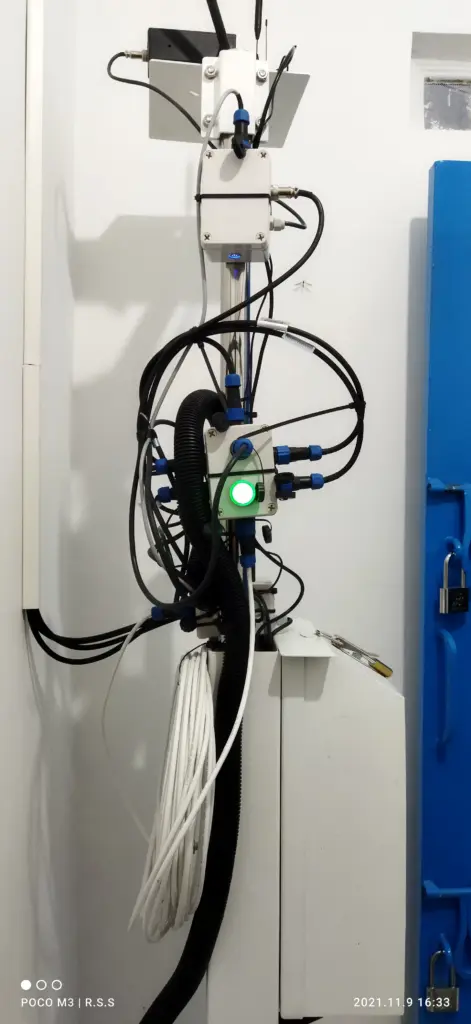
Preserving water resources is one of the greatest environmental challenges in the modern era. Rivers and lakes, which serve as raw water sources for millions of people, are highly vulnerable to pollution from both domestic and industrial waste. To address this issue proactively, the Ministry of Environment and Forestry (KLHK) of the Republic of Indonesia initiated a cutting-edge environmental monitoring system known as ONLIMO KLHK.
As a pioneer in telemetry systems and the Industrial Internet of Things (IIoT), Fortuna Argatech plays a vital role in providing the technological infrastructure that supports this monitoring system. This article will thoroughly explore what ONLIMO is, how it works, and its differences from other industrial waste monitoring systems.
What is ONLIMO KLHK?
ONLIMO (Online Monitoring) is a water quality monitoring system that operates continuously, automatically, and in real-time. Unlike conventional methods where officers must take river water samples into bottles and test them in laboratories over several days, ONLIMO provides actual water quality data at that exact second.
The primary goal of the ONLIMO system initiated by KLHK and regional Environmental Agencies (DLH) is to determine the Water Quality Index (IKA), detect early pollution, and serve as a scientific basis for spatial policy-making and the protection of hydrological ecosystems.
Fundamental Differences Between ONLIMO and SPARING
In KLHK regulations, you might often hear the terms ONLIMO and SPARING. Although both use similar telemetry technology, their functions and monitoring targets are very different:
- ONLIMO: Installed in natural water bodies such as rivers, reservoirs, or lakes. This system monitors the quality of widely mixed environmental water. It is generally managed and budgeted by government institutions (such as DLH or the River Basin Center).
- SPARING: Installed at the waste discharge point (outlet) of an industrial estate or factory before the water flows into the river. This system focuses on industrial compliance and is financed by the company itself.
Water Quality Parameters Monitored by Sensors
To determine whether a water body is healthy or not, an ONLIMO station is equipped with a multiparameter water quality sensor probe. Some of the key parameters continuously read by the system include:
- pH (Acidity Level): The basic indicator of water viability.
- DO (Dissolved Oxygen): The higher the DO, the healthier the aquatic ecosystem is for fish and microorganisms.
- Turbidity: Measures how many suspended particles make the water murky, often caused by erosion or soil runoff.
- Temperature: A drastic temperature change can indicate thermal pollution from a factory.
- BOD and COD: Indicators of the level of organic and chemical pollution in the river.
How IIoT-Based ONLIMO Works
The operational process of ONLIMO resembles an early warning system architecture, where data speed and accuracy are everything.
- Sensor Station Installation: Sensors are placed directly into the river stream. These sensors can be mounted on bridge structures, concrete pillars on riverbanks, or using specialized floating buoys (pontoons).
- Processing by Datalogger: Data captured by the sensors is read by a control panel or smart datalogger (such as Fortuna Argatech’s GEOVOS system). This unit converts the sensor’s analog signals into valid digital data.
- Telemetry Transmission: Considering many large rivers are in remote areas or locations with poor signal coverage, the datalogger transmits data using GSM/GPRS, local radio systems, or even satellites to prevent data dropouts (delay).
- Visualization at the Command Center: The data flows directly to the KLHK/DLH server dashboard. If a sudden surge of waste pollution occurs upstream, the system will sound a warning alarm in the Command Center so officers can immediately take mitigation actions before the pollution spreads downstream.
Fortuna Argatech’s Contribution to ONLIMO Integration
Building monitoring stations along riverbanks comes with severe natural challenges, such as the risk of floods, extreme humidity, and even attacks by wild animals. This is where Fortuna Argatech’s engineering takes its role.
The Environment Monitoring system from Fortuna Argatech is designed with high industrial-grade durability. The panel equipment is weather-protected, supported by an independent solar panel system to operate in areas without electricity, and features software integration that is 100% compatible with the central government server’s Application Programming Interface (API). Consequently, regional DLHs do not need to worry about disconnected data integration.
The implementation of ONLIMO KLHK is a concrete manifestation of modern river conservation efforts based on smart data.
FAQ
What is the difference between ONLIMO and SPARING?
ONLIMO is used to monitor environmental water bodies like rivers and lakes. SPARING is used at factory final discharge channels before the wastewater enters the river.
Who is responsible for installing ONLIMO?
Typically, ONLIMO is installed and managed by government institutions such as the Ministry of Environment and Forestry (KLHK) or Provincial/Regency/City Environmental Agencies (DLH).
What is the most important parameter to determine if river water is healthy?
Dissolved Oxygen (DO). Healthy river water has sufficient DO levels to support the life of fish and microorganisms within it.
Does Fortuna Argatech’s ONLIMO device require city electricity (PLN)?
Not always. The Fortuna Argatech system is designed efficiently and can be powered using Solar Power along with backup batteries, making it highly ideal for installations on riverbanks far from city infrastructure.
What if the ONLIMO sensor gets covered in river dirt or mud?
Modern sensors are equipped with auto-wiper technology or automatic cleaning systems, supported by periodic calibration and maintenance schedules from Fortuna Argatech’s technical team to ensure accurate readings.
Where is the ONLIMO data sent?
The data is sent to the Data Center (Command Center) of the relevant government agency (e.g., KLHK Data Center) in real-time via GSM, radio, or satellite.
Sources
- Ministry of Environment and Forestry (KLHK) RI. (Accessed 2026). Continuous and Online Water Quality Monitoring System (ONLIMO). https://ppkl.menlhk.go.id/
- Directorate of Water Pollution Control KLHK. (Accessed 2026). Technical Guidelines for ONLIMO Implementation in Regions.
- Fortuna Argatech Company Claims. (Accessed 2026). ONLIMO and Environment Monitoring Solution System Architecture.
Share this article
Share this insight with your team.
Related Articles
Similar topics from the same category.
Compare multiparameter sensor probes and single-parameter sensors on flexibility, maintenance, cabling, replacement cost, and regulatory fit.
Guide to choosing submersible, flow cell, or bypass installation for online water quality sensors based on sensor type and site conditions.
Trace differences between online and laboratory data through six checks covering method, timing, samples, sensor condition, data processing, and acceptance.