Landslide EWS: How It Works, Components, and Benefits
A landslide EWS helps monitor slope changes and warn teams earlier when conditions become dangerous. Learn how it works, what it includes, and why it matters.
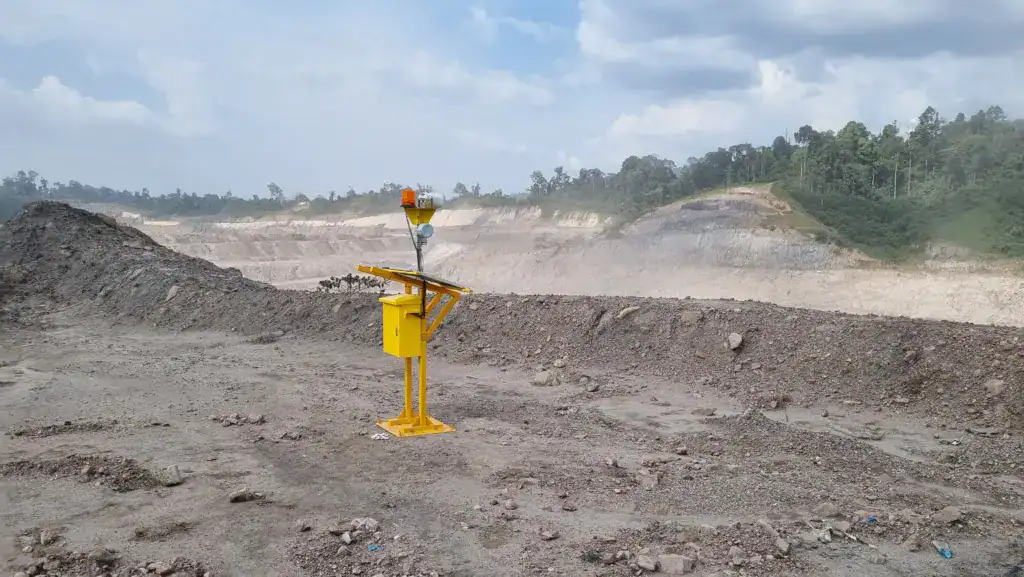
A landslide EWS is an early warning system used to monitor the first signs of slope instability. In landslide risk management, response time matters. That is why a system that can detect small changes before visible damage appears is valuable for technical teams and local governments.
The U.S. Geological Survey (USGS) explains that landslides may move very slowly or very quickly, and they often happen without clear warning signs. At the same time, BNPB highlights the importance of preventing landslide impacts early. Together, these references show why early monitoring is needed.
This image helps readers understand that slope monitoring is not only about devices, but also about faster decisions.
In general, a landslide EWS combines field sensors, a data logger, wireless communication, and a monitoring dashboard. Fortuna Argatech presents this system as a structured way to read ground movement in a more organized and real-time manner.
What is a landslide EWS?
EWS stands for Early Warning System. In the landslide context, it is designed to detect changes that may lead to ground movement, such as slope deformation, angle changes, heavy rainfall, or movement at a measured point.
A landslide EWS does not stop the disaster. However, it gives teams extra time for inspection, access restriction, or early evacuation.
Why does a landslide EWS matter?
Landslides often occur soon after heavy rainfall or a change in soil conditions. If monitoring relies only on visual observation, the early signs can be missed. That is why a landslide EWS is an important decision-support tool.
Main components of a landslide EWS
1. Slope sensors
Slope sensors are used to read physical changes in a risk area. In Fortuna Argatech materials, inclinometers and extensometers appear among the most common examples.
2. Rain sensor
A rain gauge records rainfall intensity. This matters because high rainfall is often a key trigger for landslides.
3. Groundwater sensor
A piezometer is used to monitor groundwater conditions or pore-water pressure. This helps teams understand whether the slope is becoming saturated.
4. Data logger and communication
Sensor data is sent to a data logger and then forwarded to the monitoring platform. In the examples shown by Fortuna Argatech, the setup is designed so operators can review the data without being on site all the time.
5. Monitoring dashboard
The dashboard displays data as numbers, charts, or warning status. From there, the team can review the trend and decide what to do next.
How a landslide EWS works
Sensors read changes
Each sensor captures a specific parameter, such as displacement, tilt, or rainfall.
Data is sent to the system
The data is then sent to a data logger or communication gateway. If the system is connected to a network, remote monitoring becomes possible.
The system shows trends
The dashboard shows daily or real-time data. From those trends, operators can see whether conditions remain safe or are moving toward danger.
Alerts are triggered when needed
If values exceed a threshold, the system can raise an alert. That alert becomes the basis for field verification and quick action.
When is a landslide EWS most useful?
High-risk areas
Hillsides, road cuts, and steep slopes are the areas that need continuous monitoring the most.
Critical infrastructure sites
Main roads, settlements, and public facilities near slopes need additional protection because the impact can be severe if a landslide occurs.
Places with a history of landslides
Areas that have experienced landslides before usually need more disciplined monitoring, especially during the rainy season.
Landslide EWS in Fortuna Argatech solutions
Fortuna Argatech presents the landslide EWS as an integrated monitoring and early warning solution. In the WordPress export, this topic appears in several project and article entries, including the Brebes implementation and content about landslide-prone areas.
This approach shows that a landslide EWS is not just a single device. It works as a chain: sensors detect change, data enters the platform, and teams get a faster basis for action.
Main benefits of a landslide EWS
- faster response time
- more focused field inspection
- earlier access restriction
- better preparedness for residents and operators
- data-driven mitigation support
Conclusion
A landslide EWS matters because landslides often begin with small changes that are hard to see. With sensors, a data logger, and a monitoring dashboard, teams can identify risk earlier and act before conditions get worse.
For landslide-prone areas, this kind of system provides practical value: faster awareness, faster action, and better readiness during extreme rain.
FAQs
What does EWS mean?
Early Warning System.
What does a landslide EWS do?
It monitors early landslide signs and warns teams sooner.
What sensors are often used?
Inclinometer, extensometer, rain gauge, and piezometer.
Does a landslide EWS stop landslides?
No, but it helps create more response time.
Must the data be monitored manually?
Not always, because it can be shown on a monitoring dashboard.
Sources
- USGS. (n.d.). Landslide Basics. https://www.usgs.gov/programs/landslide-hazards/landslides-101
- BNPB. (2024, July 24). Longsor – Mencegah Dampak. https://bnpb.go.id/siaga-bencana/longsor-mencegah-dampak
- Fortuna Argatech. EWS Longsor BPBD Brebes sebagai Inovasi Tanggap Dini. https://www.ewslongsor.id/portofolio/ews-longsor-bpbd-brebes-sebagai-inovasi-tanggap-dini/
- Fortuna Argatech. Gunungkidul Rawan Longsor Saat Hujan Deras. https://www.ewslongsor.id/artikel/gunungkidul-rawan-longsor-saat-hujan-deras/
Share this article
Share this insight with your team.
Related Articles
Similar topics from the same category.
Poor weather station placement can cause 50% data bias. Learn the WMO-No. 8 and Indonesian BMKG siting standards for AWS sensors in industrial and mining sites.
Explore a technical engineering comparison between solid-state ultrasonic anemometers and mechanical cup-and-vane sensors for industrial weather stations.

Technical guide to conductivity sensors: comparing toroidal (inductive), 2-electrode, and 4-electrode contacting probes for industrial water and wastewater.