Sensor Turbidity: More Reliable Water Monitoring
A turbidity sensor helps read water cloudiness with a more structured real-time monitoring setup.
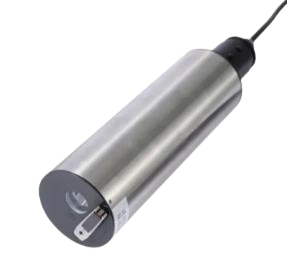
A turbidity sensor is used to monitor water cloudiness in real time. On Fortuna Argatech’s official product page, this sensor is the BOQU unit with RS485 Modbus communication, IP68/NEMA6P protection, SUS316L or titanium alloy body, and a range of up to 4000 NTU.
USGS explains turbidity as the measure of the relative clarity of a liquid. The more light is scattered by material in the water, the higher the turbidity. That is why turbidity is a key indicator in water-quality monitoring.
What is turbidity?
Turbidity is the level of water clarity. Clear water has low turbidity, while cloudy water has higher turbidity.
USGS also notes that turbidity can be caused by clay, silt, very small inorganic and organic matter, algae, dissolved colored organic compounds, plankton, and other microscopic organisms.
Why monitor turbidity?
It shows water condition quickly
Turbidity gives a fast picture of whether water is clearer or cloudier than usual.
It helps track rain and sediment impacts
After rainfall, particles from land can wash into a river and raise turbidity.
It can indicate potential pollution
USGS says turbidity readings can be used as an indicator of potential pollution in a water body.
It supports treatment decisions
Monitoring turbidity helps operators understand changes at river intakes, in treatment systems, or in wastewater processes.
How does the sensor work?
In general, a turbidity sensor shines light through water and reads the light that is scattered or reflected back by particles in the sample. The greater the scattering, the higher the turbidity value.
The result is usually shown in NTU, which stands for Nephelometric Turbidity Units.
When is this sensor used?
A turbidity sensor fits when:
- rivers need real-time monitoring
- wastewater needs water-quality control
- teams want data before and after rainfall
- the sensor must connect to a data logger, PLC, or SCADA
- the installation needs a submerged, corrosion-resistant device
Key specifications
All specifications below refer to Fortuna Argatech’s official product page: https://argatech.com/sensor/sensor-turbidity/ (no date).
- Brand: BOQU
- Sensor type: Turbidity Sensor
- Measurement range: 0.01-100 NTU / 0.01-4000 NTU
- Communication: RS485 Modbus
- Main body material: SUS316L (standard version) / Titanium Alloy (seawater version)
- Waterproof rating: IP68 / NEMA6P
- Indication accuracy: < +/-5% of measured value (depending on sludge homogeneity)
- Pressure range: <= 0.4 MPa
- Maximum flow speed: <= 2.5 m/s
- Ambient temperature: 0-45 C
- Power supply: 12 VDC
- Calibration: Sample Calibration, Slope Calibration
What do these specs mean in the field?
- Up to 4000 NTU makes the sensor suitable for a wide turbidity range.
- RS485 Modbus makes integration into data loggers, PLCs, or SCADA easier.
- IP68/NEMA6P supports submerged installations.
- The titanium version is more suitable for seawater or corrosive environments.
- Sample and slope calibration help align readings with field conditions.
Turbidity sensor in the monitoring ecosystem
Turbidity sensors are often used together with pH, DO, temperature, and conductivity. In systems like ONLIMO or industrial water monitoring setups, those parameters help teams see water conditions more completely.
Main benefits
- helps teams read water clarity changes faster
- supports river and wastewater monitoring
- makes control-system integration easier
- helps detect sediment spikes after rain
- strengthens continuous water-quality evaluation
Conclusion
A turbidity sensor is an important tool for structured water-cloudiness monitoring. With NTU output, RS485 Modbus communication, and a water-resistant build, it helps teams monitor water quality in a more consistent and actionable way.
FAQ
What is a turbidity sensor?
A sensor used to measure water cloudiness.
What unit does it use?
NTU, or Nephelometric Turbidity Units.
Can it be used in rivers?
Yes, it is well suited for river monitoring.
Can it connect to SCADA?
Yes, through RS485 Modbus.
Is there a version for seawater?
Yes, Titanium Alloy is available.
Is it suitable for real-time monitoring?
Yes, if connected to the right monitoring system.
Sources
- Fortuna Argatech. (no date). Sensor Turbidity. https://argatech.com/sensor/sensor-turbidity/
- U.S. Geological Survey. (6 June 2018). Turbidity and Water. https://www.usgs.gov/special-topics/water-science-school/science/turbidity-and-water
Share this article
Share this insight with your team.
Related Articles
Similar topics from the same category.

Poor weather station placement can cause 50% data bias. Learn the WMO-No. 8 and Indonesian BMKG siting standards for AWS sensors in industrial and mining sites.

Explore a technical engineering comparison between solid-state ultrasonic anemometers and mechanical cup-and-vane sensors for industrial weather stations.

Technical guide to conductivity sensors: comparing toroidal (inductive), 2-electrode, and 4-electrode contacting probes for industrial water and wastewater.