Meeting Indonesian Groundwater Telemetry Rules for Production and Monitoring Wells
A comprehensive guide to industrial groundwater telemetry compliance in Indonesia under Permen ESDM 14/2024, detailing production and monitoring well rules.
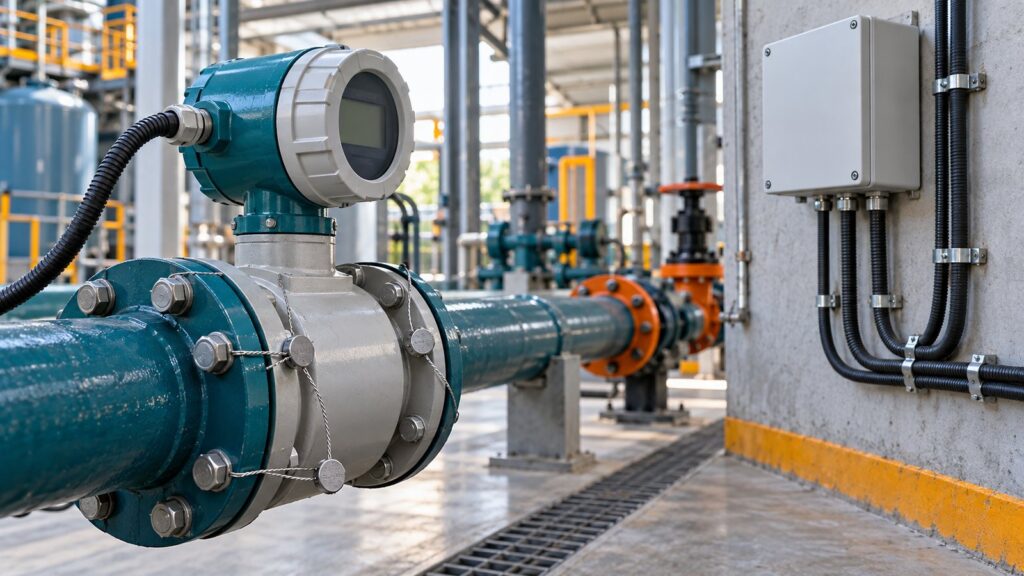
The Ministry of Energy and Mineral Resources (ESDM) doesn’t mess around with groundwater abstraction anymore. Permen ESDM 14/2024 enforces strict telemetry requirements for industrial SIPA holders. If you pump water, you need to measure it accurately. If you pump enough volume to hit the upper thresholds, the law forces you to drill a dedicated monitoring well too. We see factories get this wrong constantly. They mix up production flowmeters with hydrostatic level sensors, or they completely botch the datalogger integration because they tried to save money on cables. Here is the actual breakdown between production and monitoring well requirements.
| Feature | Production Well (Flowmeter) | Monitoring Well (AWLR) |
|---|---|---|
| Regulatory Purpose | Measure abstraction flow volume and daily pump operation hours. | Monitor natural groundwater level (piezometric head) fluctuations. |
| Mandatory Condition | Required for every active SIPA production borehole. | Triggered at 5 boreholes or 5,000 m³/day extraction. |
| Sensor Type | In-line Flowmeter (Electromagnetic or Ultrasonic). | Vented Hydrostatic Level Sensor (AWLR). |
| Installation Point | Surface discharge pipe. | Dedicated piezometric well (no suction pump). |
| Output Protocol | Pulse or RS-485 Modbus RTU. | 4-20mA Analog or RS-485 Modbus RTU. |
| Accuracy Standard | SNI 2547:2008 (MPE ± 2%). | High-precision millimeter level measurement. |
| Legal Requirement | Valid UTTP Metrological Seal (Tera Sah). | Vented capillary cable with desiccant cartridge protection. |
Datalogger Architecture and ESDM Reporting
Getting the sensors installed is only half the battle. You have to push that telemetry data to the Geological Agency portals, either SIPASTI or ARTESIS. The auditors demand cumulative daily volume, instantaneous flow rate, and pump run hours. For the monitoring wells, they specifically need water levels in mbmt and mdpl. You submit this every six months. No exceptions.
Stop relying on operators with clipboards because manual readings are a total disaster. Glass fogs up. Numbers get swapped. Sometimes data gets intentionally massaged to fit the legal quotas. ESDM auditors actively hunt for these exact discrepancies during their inspections. When a field inspector notices that the records look cooked, they will hit the facility with massive groundwater tax (NPA) penalties without hesitation.
You need a rugged industrial datalogger at the wellhead. It grabs digital pulses or reads the Modbus registers directly from the flowmeter. Factory environments completely destroy cheap electronics. The field hardware must survive baking heat, heavy vibration, and power spikes. Cellular signals inside sprawling manufacturing plants also drop out constantly. To counter this, your datalogger requires local non-volatile memory to buffer the telemetry data locally and forward it only when the 4G connection stabilizes again. Lost packets trigger compliance failures.
Security matters just as much. Government auditors expect an unbroken digital audit trail. Your system must log enclosure door openings, power failures, and any changes to the calibration parameters. If a technician alters a scaling factor on Tuesday at midnight, the datalogger needs to record that exact event. You simply cannot submit manipulated flow data.
Hardware Integration and Legal Risks
Law No. 17 of 2019 on Water Resources actually has teeth. Pumping without proper permits or violating your quota conditions will trigger massive fines ranging from IDR 1 billion to 5 billion. Plant managers might even face prison time. You cannot fix this problem by blindly bolting random sensors together. The entire telemetry loop must function flawlessly as a single integrated system.
At Fortuna Argatech, we build monitoring stations that actually survive the field and strictly meet Permen ESDM 14/2024 requirements. We pair metrologically certified flowmeters and IP68 vented hydrostatic level sensors with the GEOVOS 1000 Datalogger. This specific hardware handles Pulse, Modbus RTU, and standard 4-20 mA inputs without complaining. It stores the payload locally. Then it pushes everything over 4G cellular networks to both your internal dashboards and the government portals. The datalogger calculates cumulative discharge directly on the edge. You can easily set early warning alarm configurations to fire off an emergency WhatsApp alert before the facility accidentally breaches its daily extraction quota.
We handle the heavy lifting for you. This includes full monitoring site surveys, custom telemetry panel fabrication, and the actual mechanical installation of the pipe fittings. We also help the plant managers get those critical metrology seals sorted out. Finally, we commission the entire data pipeline online.
Site Audit Checklist
Plant managers need to physically walk out to their wells today. A total production shutdown over missing telemetry data is both embarrassing and highly expensive. Run this internal audit immediately.
- Check the Seals: Look directly at the production flowmeters. Do they have a valid “Tera Sah” metrology seal? If the certificate expired last year, pull them and get them recalibrated immediately.
- Check Signal Outputs: Inspect the meter head wiring. Can it output a clean Pulse or Modbus signal for the datalogger? If you are still staring at old mechanical dials, you have to rip them out and upgrade to a digital unit.
- Count the Wells: Tally up every active borehole on the property. Sum up the permitted daily abstraction volume. If you hit 5 boreholes or 5,000 m³/day, the law requires you to install an Automatic Water Level Recorder (AWLR) inside a dedicated monitoring well.
- Check Sensor Placement: Never drop a hydrostatic level sensor into a production well that has an active suction pump running. It will just read garbage data. For the actual piezometric monitoring wells, verify that the cable has proper vented desiccant protection installed at the surface. Read our technical breakdown on vented vs non-vented sensors if you are confused by the difference.
- Kill the Logbooks: Stop writing flow numbers on paper clipboards. Transition the facility to a secure datalogger that pushes payloads straight to SIPASTI or ARTESIS without human intervention.
Automating this entire telemetry process keeps you out of legal trouble. You get perfectly clean flow data. The mandatory semester reporting happens automatically in the background. Most importantly, you keep the manufacturing plant running at full capacity and keep the government auditors completely off your back.
Share this article
Share this insight with your team.
Related Articles
Similar topics from the same category.
Monitoring station OPEX budget planning guide covering five cost pillars, cross-station comparison, hidden costs, and a modular worksheet for annual budgeting.

8 mandatory monitoring criteria for PROPER Blue rating under PermenLH 7/2025: SPARING, AQMS, B3, waste, peatland, mining, and SIMPEL audit.

Compare TDR and FDR soil moisture sensor principles, dielectric calibration limits for tropical peat, and multi-depth telemetry integration via GEOVOS 1000.