5 Common AQMS Air Sensor Installation Mistakes You Must Avoid
Installing ambient pollution trackers requires serious precision. Quickly learn the 5 most common mistakes when installing a new AQMS Air Sensor.
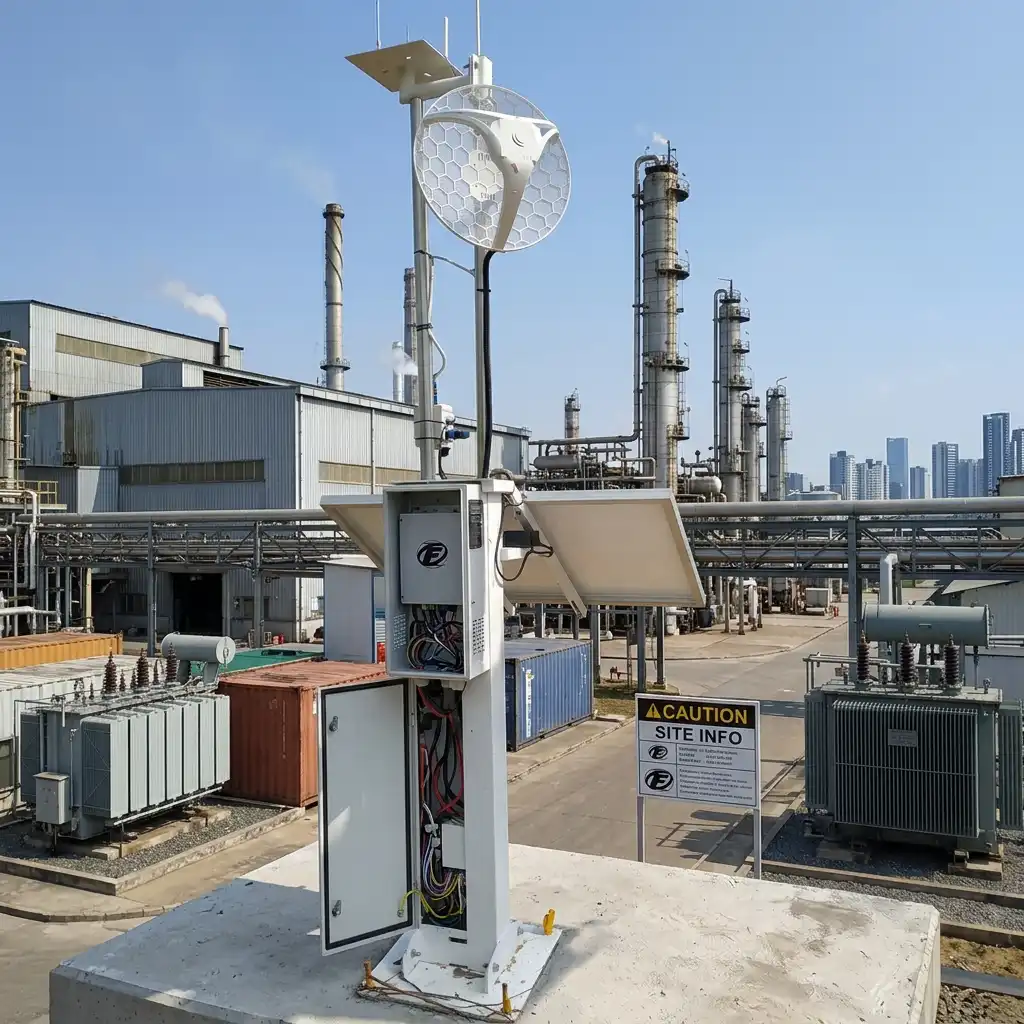
Steadily worsening urban air pollution has aggressively forced numerous industrial zones and local municipalities to rapidly install emission monitoring equipment. This is exactly where advanced technology like an AQMS Air Sensor (Air Quality Monitoring System) steps in as the primary operational backbone. The underlying goal is incredibly simple, which is continuously tracking the standard pollution index in perfect real-time to ensure environmental policies are executed accurately. However, simply purchasing incredibly expensive hardware is never actually enough if you install it poorly.
Out in the physical field, our engineers frequently discover advanced telemetry equipment displaying random numbers or breaking down prematurely simply due to careless technical negligence. Making tiny mistakes during the initial installation process can rapidly lead to fatal consequences, ranging from harsh government warnings to massive financial fines because the submitted data is legally deemed invalid. Therefore, if your corporation seriously plans to accurately track ambient air quality, there are several hidden technical traps you must consciously avoid.
Operating proudly as the absolute pioneer of telemetry technology in Indonesia, Fortuna Argatech deeply understands these practical field challenges. Consequently, let us thoroughly examine the five most frequent errors contractors consistently make when physically deploying these sensitive pollution tracking instruments.
1. Choosing a Blind Installation Location
The absolute most frequent error our engineers encounter is bolting the primary sensor pole in a completely useless location. Inexperienced technicians often blindly install an AQMS Air Sensor in tight corners totally blocked by heavy steel canopies, directly behind towering buildings, or completely hidden beneath massive tree branches.
This heavily restricted placement physically prevents the natural prevailing winds from smoothly carrying fresh pollutant samples directly into the hardware intake. Consequently, the air quality data displayed on your digital dashboard constantly looks wonderfully clean, even when the factory next door is aggressively venting thick black smoke. The optimal installation location is always a widely open area that perfectly represents the true natural wind circulation of that specific industrial zone.
2. Completely Ignoring Initial Field Calibration
Many careless users incorrectly assume that brand new electronic hardware pulled straight from the shipping box is magically ready to operate. However, this reckless assumption is profoundly dangerous when dealing strictly with sensitive environmental precision instruments. Every single gas detection sensor possesses a delicate internal sensitivity that can easily drift off-balance due to rough vibrations experienced during long truck deliveries.
Therefore, performing an absolute rigorous initial calibration at the specific installation site is an unavoidable requirement. If you lazily skip this mandatory zero and span calibration phase, you should not be surprised when your telemetry equipment randomly reports highly illogical spikes in Carbon Monoxide levels.
3. Supplying Highly Unstable Electrical Power
A vast majority of ambient air monitors are permanently bolted in rugged outdoor environments severely lacking basic infrastructure. Frequently, the primary electrical supply is dangerously pulled using cheap extension cables highly vulnerable to catastrophic short circuits whenever heavy rain strikes.
The internal data processing brain (Data Logger) hidden inside the AQMS panel is incredibly sensitive to sudden erratic voltage spikes. To reliably solve this, the expensive hardware must absolutely be natively integrated with heavy-duty Solar Panel systems and independent industrial batteries, or at the very least protected by a commercial-grade voltage stabilizer to permanently guarantee a long operational lifespan.
4. Failing Basic Cable and Moisture Management
Environmental telemetry hardware must be perfectly prepared to be aggressively tortured by scorching heatwaves and violent tropical storms continuously. Unfortunately, lazy technicians frequently jam sensitive communication cables directly into the main control panel box without utilizing proper waterproof rubber seals (cable glands).
It mathematically takes merely a few tiny drops of morning dew or seeping airborne humidity to completely fry the primary circuit board instantly. Furthermore, untreated condensation gathering inside the sensitive sensor housing can rapidly blur the delicate optical lenses actively utilized to measure microscopic fine dust (particulate matter).
5. Disconnecting from Reliable Cloud Ecosystems
The absolute final frustrating mistake is foolishly allowing this highly advanced instrument to operate in total digital isolation. Stubbornly storing vital pollution data exclusively inside the local hardware memory is mathematically equivalent to completely throwing away the primary benefit of modern telemetry technology.
A properly engineered system must successfully transmit those critical pollution numbers straight to the smartphones of security managers and government compliance servers in flawless real-time. This is precisely where Fortuna Argatech hardware brilliantly outshines the competition, because our heavily secured ecosystem guarantees continuous digital data delivery straight into your remote dashboard utilizing advanced Wireless networks.
FAQ
Exactly how frequently must these sensitive air quality instruments be properly recalibrated?
Generally speaking, standard operating guidelines strongly recommend executing a routine recalibration every six months. However, this specific timeline can dramatically shorten if the delicate hardware is permanently deployed in heavy industrial zones containing incredibly dusty environments and highly corrosive gases. Routine calibration strictly guarantees data authenticity when legally reporting to government authorities.
Is this specific air monitoring equipment truly resistant to violent tropical rainstorms?
Absolutely. The rugged industrial hardware proudly engineered by Fortuna Argatech is specifically manufactured utilizing heavily specialized protective casings (typically rated at IP65 or significantly higher). This rigorous standard mathematically guarantees the delicate electronics remain completely sealed against thick industrial dust and perfectly safe from high-pressure storm water aggressively spraying from every possible direction.
What specific scientific parameters are actually measured by this advanced system?
A highly comprehensive air monitoring system fundamentally detects microscopic fine dust particulates (specifically PM10 and PM2.5), alongside a dangerous collection of invisible hazardous gases. The primary gases typically measured explicitly include Carbon Monoxide (CO), Sulfur Dioxide (SO2), Nitrogen Dioxide (NO2), and Ground-Level Ozone (O3), which universally serve as the primary indicators for mathematically calculating the Standard Air Pollution Index.
Can this telemetry monitoring device be physically wired directly to massive public LED screens on the highway?
Absolutely. The highly advanced smart Data Logger ecosystem safely hidden inside the main panel completely supports flawless direct integration into various types of external commercial LED screens. Typically, this specific digital feature is aggressively utilized by Smart City government programs so that local civilian residents can easily read the real-time pollution levels while comfortably driving through major urban intersections.
Why does the digital system occasionally display terrifyingly high pollution numbers only during specific morning hours?
Sudden temporary numerical spikes are fundamentally heavily influenced by localized shifting wind directions and extreme weather anomalies. For instance, the highly sensitive sensor might briefly catch a thick plume of toxic exhaust completely blown over from a neighboring factory by strong winds, or simply because incredibly high morning humidity physically traps dangerous pollutants densely hugging the ground surface.
Sources and Bibliography
- United States Environmental Protection Agency (EPA). (n.d.). Quality Assurance Handbook for Air Pollution Measurement Systems.
- Fortuna Argatech. (n.d.). Integrated Air Quality Monitoring System Solutions. https://argatech.com
- World Meteorological Organization (WMO). (n.d.). Standard Best Practices for Siting Ambient Air Quality Monitoring Stations.
Share this article
Share this insight with your team.
Related Articles
Similar topics from the same category.
An Ultrasonic Flow Sensor is crucial for measuring open water channels precisely. Discover its 5 essential features from Fortuna Argatech.
A Mining TSS Sensor must be installed in settling ponds to avoid severe penalties. Discover the 5 critical reasons here.
Floods caused 51% of Indonesia's 2025 disasters. Discover the 5 essential Flood EWS components that transform any city into a resilient urban center.