Vented vs Non-Vented Hydrostatic Level Sensors: Barometric Compensation and Field Reliability
Guide to choosing vented vs non-vented hydrostatic level sensors, mitigating capillary condensation risks, and automating barometric compensation.
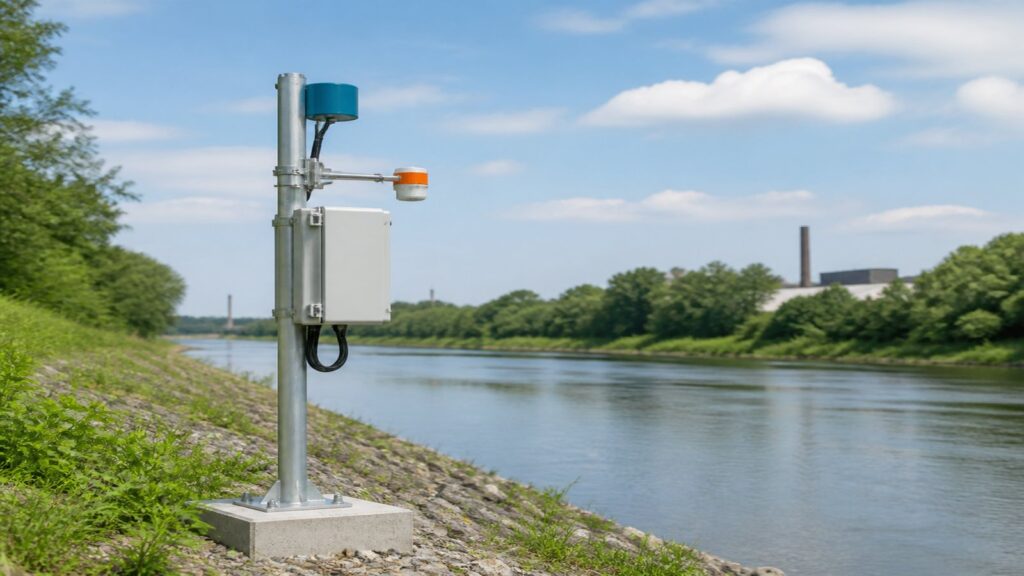
When a storm rolls in, atmospheric pressure can swing by 20 to 30 mbar. If your system isn’t actively compensating for that shift, your water level sensor readings will drift by up to 30 centimeters. Field teams miss this failure all the time. They sit in the control room trusting a flatline graph until someone walks outside and realizes the physical staff gauge tells a completely different story.
If you need to measure water depth from below the surface, hydrostatic level sensors are usually the default answer. Engineers stick them in monitoring wells, industrial tanks, and river AWLR (Automatic Water Level Recorder) stations. But these sensors come in two distinct architectures: vented (gauge) and non-vented (absolute). Getting this choice wrong isn’t just about bad data. It’s about buying a sensor that will literally drown itself in tropical humidity.
Why Barometric Pressure Ruins Water Level Data
Basic fluid mechanics tells us that hydrostatic pressure scales with fluid density, gravity, and the height of the liquid column. The catch is the sensor’s diaphragm. A submersible pressure sensor doesn’t just read the water pushing against it. It reads the water column pressure stacked on top of the raw atmospheric pressure pushing down on the lake surface.
One millibar of pressure fluctuation shifts the fresh water reading by roughly 1.02 centimeters. If the barometric pressure drops 20 mbar right before a storm, your submerged sensor suddenly feels less total weight. It reports a 20.4 cm drop in the water level, even if the actual water hasn’t moved an inch. Without proper compensation math, your SCADA dashboard logs that phantom drop as a hard fact.
Vented Sensors: Capillary Tubes and the Condensation Trap
Vented sensors run a hollow capillary tube inside the main cable jacket all the way to the surface. This tiny pipe feeds surface-level air pressure down to the backside of the submerged diaphragm. Since the atmospheric pressure pushes on the back while the water column pushes on the front, the barometric error cancels itself out automatically. You get instant, clean water level readings without running a single line of corrective software.
But that open tube is a massive liability. If you operate in a tropical climate where humidity routinely breaks 80%, you are asking for trouble. Small capillary tubes block easily. If the cable gets pinched or sharply bent, the tube chokes. Worse, if ambient water vapor snakes down the tube and condenses, the trapped droplets lock in the air pressure. Your readings go crazy. Leave it long enough, and the internal sensor module simply rusts out.
Agencies like the USGS know this. Their manuals demand a desiccant cartridge packed with silica gel right where the cable terminates at the surface. The silica absorbs the moisture before it hits the tube. When the gel changes color, it’s dead. A technician has to drive out there and swap the cartridge before the next rainstorm hits, or the sensor is compromised.
Non-Vented Sensors: Absolute Durability
Non-vented (absolute) sensors ditch the tube entirely. The housing is completely sealed. The diaphragm measures the crushing force of the water against an internal vacuum chamber. No capillary tube means zero risk of internal condensation. The cable is solid and incredibly tough. If a catastrophic flood completely submerges the surface control panel, the sensor won’t flood from the inside out.
The catch is the math. Non-vented sensors measure absolute pressure. To figure out the actual water depth, you have to subtract the local barometric pressure using a separate air pressure sensor (a barologger). Also, your absolute sensor needs a much wider measuring range because it has to account for the baseline 1 bar of atmospheric pressure sitting on the water.
Technical Comparison Matrix: Vented vs Non-Vented
You need to weigh the physical risks against the software complexity. Choosing a basic water level sensor is easy. Picking the exact architecture requires brutal honesty about your field maintenance schedule.
| Parameter | Vented (Gauge) Sensor | Non-Vented (Absolute) Sensor |
|---|---|---|
| Compensation Method | Automatic, internal via capillary tube | Requires separate external barologger |
| Data Output | Instant clean water level | Total pressure (water + atmospheric) |
| Humidity Risk | Very high, mandatory routine desiccant maintenance | Low, sensor is hermetically sealed |
| Cable Physical Durability | Prone to blockage if kinked; susceptible to moisture corrosion | Highly robust; no internal tube issues |
| Cumulative Accuracy | More precise (±0.05% to ±0.1%) | Combined calculation adds slight error |
| Maintenance Complexity | Strictly scheduled desiccant and tube inspection | Minimal; virtually free of routine cable maintenance |
Two Ways to Handle Barometric Compensation
If you go the non-vented route, air pressure compensation isn’t optional. You have two ways to do it.
1. The Manual Offline Route
You can run a single land-based barologger to cover a 30-kilometer radius of submerged sensors, assuming the weather and elevation are identical across the zone. You pull the data, dump it into a spreadsheet, and run the compensation math manually. The clock synchronization between the submerged sensor and the barometer has to be flawless. Also, atmospheric pressure drops 1.2 mbar for every 10 meters you go up in elevation. If your barometer sits on a hill while your water sensor sits in a valley, your spreadsheet math has to account for that altitude gap.
2. Real-Time Edge Computing
Manual spreadsheet math is tedious and completely unscalable. The modern approach is to wire a digital barometer directly into the local control panel. When you feed that air pressure data into an industrial-grade logger like the Fortuna Argatech GEOVOS 1000, the machine does the compensation math locally at the edge. By the time the telemetry packet hits your cloud dashboard, the data is already scrubbed. You get a pure, real-time water elevation chart without lifting a finger.
What Should You Actually Buy?
If you are dropping sensors down a deep groundwater well, stick to the non-vented architecture. The thick, solid cable is much easier to unspool down a narrow PVC pipe. You never have to worry about a fragile vent tube crimping under its own weight fifty meters down.
River AWLR stations are a different story. If you need a split-second electrical response to trigger a downstream flood alarm, a premium vented sensor gives you the fastest possible read. Just make sure the desiccant cartridge is easily accessible. But if the station sits in a remote, humid jungle where nobody is going to change the silica gel for six months, a vented sensor is a ticking time bomb. Buy an absolute sensor, mount a barometer in the panel, and let the software handle it.
Your decision ultimately comes down to your field maintenance schedule and your telemetry backbone. Fortuna Argatech builds 316L stainless steel Liquid Level Transmitters with IP68 submersible ratings and tight accuracy specs for exactly these scenarios. Talk to a Fortuna Argatech engineer before you order. They can look at your specific site and tell you exactly which architecture will survive.
Share this article
Share this insight with your team.
Related Articles
Similar topics from the same category.

Poor weather station placement can cause 50% data bias. Learn the WMO-No. 8 and Indonesian BMKG siting standards for AWS sensors in industrial and mining sites.

Explore a technical engineering comparison between solid-state ultrasonic anemometers and mechanical cup-and-vane sensors for industrial weather stations.

Technical guide to conductivity sensors: comparing toroidal (inductive), 2-electrode, and 4-electrode contacting probes for industrial water and wastewater.