Textile Wastewater: 921 Pollution Cases Trigger Crackdown
KLHK enforced 921 pollution cases with IDR 84.7 billion in fines. Textile Wastewater offenders face IDR 3 billion penalties without real-time SPARING monitoring.
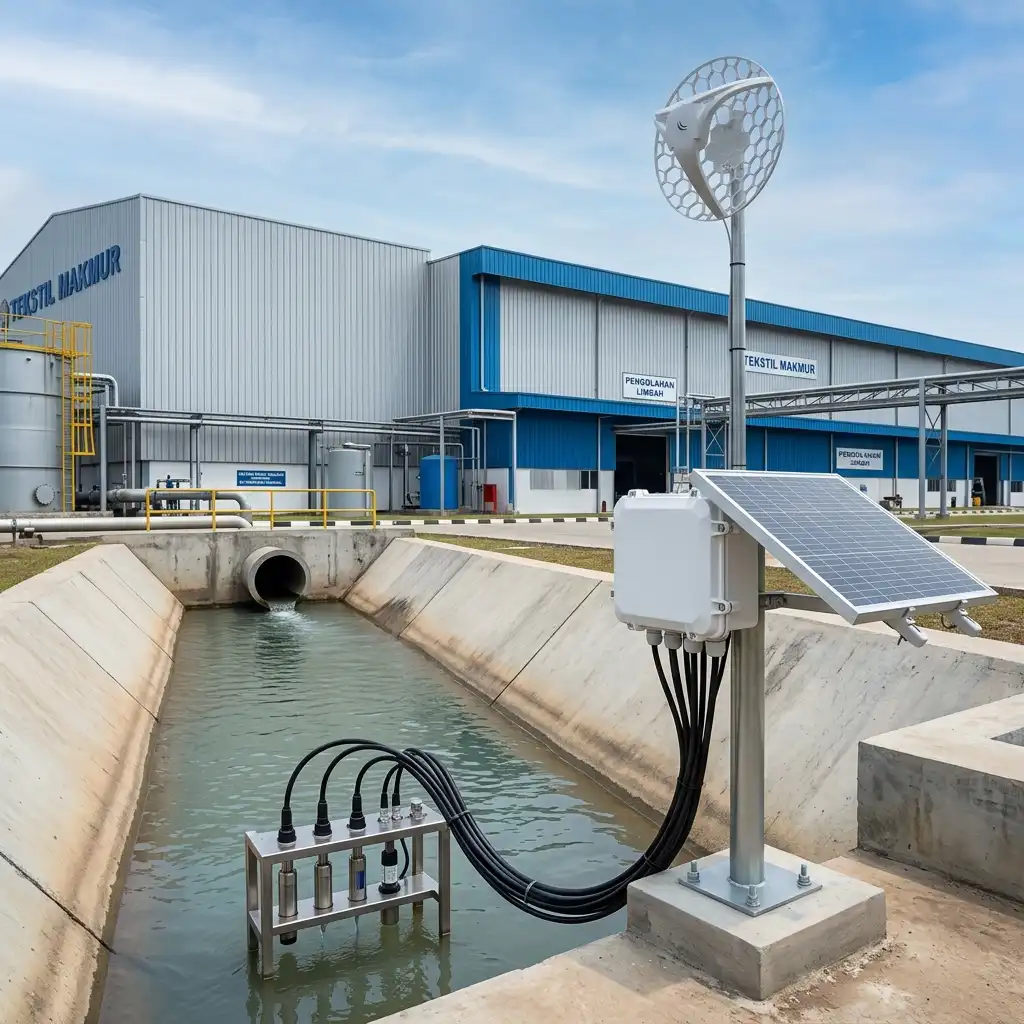
A total of 921 environmental pollution cases landed on KLHK‘s enforcement desk between November 2024 and September 2025. Out of those, 845 businesses received administrative sanctions. Textile Wastewater ranked among the most significant contributors to river contamination across Java. Collected fines reached IDR 84.7 billion. An additional IDR 265 billion remains pending from ongoing cases.
The message from regulators is unmistakable: textile factories operating without real-time monitoring systems face existential risk.
Why Textile Wastewater Poses Extreme Danger to Rivers
The textile industry generates liquid waste containing highly complex chemical compounds. Synthetic dyes, heavy metals, and organic pollutants flow out from every stage of fabric production. Parameters such as pH, COD, TSS, and ammonia nitrogen frequently exceed legal thresholds.
Furthermore, the sheer volume of Textile Wastewater is staggering. A mid-sized factory alone produces over 1,000 m³ of liquid effluent daily. Without adequate treatment, that entire volume enters the nearest water body directly.
Indonesia’s River Crisis: 70.7% Contaminated
Recent data from KLHK reveals an alarming reality. Approximately 70.7% of all river monitoring points across Indonesia register as polluted. DKI Jakarta recorded every single river monitoring point as fully contaminated.
Textile industrial zones in West Java, particularly the Citarum River basin, attract global scrutiny. Textile Wastewater from hundreds of garment factories has burdened that river ecosystem for decades.
New Regulations Tighten Oversight on Textile Wastewater
PermenLHK No. 14/2024: Heavier Sanctions
The latest regulation introduces significant changes. PermenLHK No. 14/2024 strengthens the administrative sanction framework for environmental violations. Fines reach up to IDR 3 billion per violation (approximately USD 190,000).
Beyond monetary penalties, this regulation grants authorities the power to revoke operating permits. Textile factories caught discharging Textile Wastewater above legal limits face forced production shutdowns.
Regulation No. 12/2025: Strict New Standards
The government issued Regulation No. 12/2025 specifically for the textile industry. This regulation establishes 20 wastewater quality parameters. The new standards prove far more stringent than previous requirements.
Each parameter covers physical, chemical, and toxicity limits. Textile factories must test all parameters before releasing effluent into water bodies.
Mandatory SPARING for High-Volume Factories
Textile factories discharging ≥1,000 m³ of wastewater per day must install a SPARING system. This system transmits effluent quality data automatically to KLHK servers. A SPARING connectivity failure triggers a “Non-Compliant” status during PROPER assessments.
Monitored parameters include pH, COD, TSS, and NH3-N. All data must transmit in real-time without interruption.
The Enforcement Wave: KLHK Data for 2024-2025
845 Businesses Sanctioned
KLHK enforcement figures show a dramatic escalation. Of the 921 cases handled, 565 originated from routine monitoring activities. The remaining 356 cases came from public complaints.
By September 2025, 460 businesses had received final sanctions. Meanwhile, 385 cases remain in various stages of resolution.
39 Cases Escalated to Criminal Prosecution
Administrative sanctions represent only the surface. KLHK pushed 39 cases into criminal proceedings. A total of 33 cases already entered courtroom trials. Law No. 32/2009 provides the legal foundation for imprisonment and criminal fines against pollution perpetrators.
Textile operations deliberately dumping untreated Textile Wastewater face direct criminal prosecution risk.
The Solution: SPARING Systems from Fortuna Argatech
Why SPARING Holds the Key to Textile Wastewater Compliance
A SPARING system fundamentally transforms wastewater monitoring. Submersible sensors directly measure water quality parameters at the compliance point. Data transmits automatically to KLHK servers every few minutes.
Fortuna Argatech provides integrated SPARING solutions specifically engineered for the textile industry. The system includes several core components:
- pH, COD, TSS, and NH3-N sensors with high accuracy for textile dye effluent
- GEOVOS 1000 datalogger with 4G connectivity and auto-reconnect capability
- Solar panels as backup power for outdoor installations
- Real-time monitoring dashboard for HSE teams and factory management
Technical Advantages for the Textile Sector
Textile Wastewater possesses unique characteristics that challenge conventional sensors. Dye compounds can foul sensor surfaces rapidly. Fortuna Argatech addresses this challenge with purpose-built anti-fouling sensors.
Moreover, the Fortuna Argatech SPARING system supports automatic calibration. This feature maintains data accuracy without frequent manual intervention. The technical team also delivers scheduled preventive maintenance services.
Direct Integration with KLHK Servers
The SPARING integration process with KLHK servers involves several critical stages:
- Company registration on the KLHK portal
- Submission of administrative and technical data (compliance point location, sensor specifications)
- Connection verification and data transmission testing
- Data validation during the trial period
Fortuna Argatech accompanies the entire integration process. The technical team ensures stable SPARING connectivity to KLHK servers from day one.
Long-Term Financial Impact Without Monitoring
The cost of installing a SPARING system falls far below the potential losses. A single IDR 3 billion fine can devastate a mid-sized factory’s cash flow. Operating permit revocation means complete production halt.
Additionally, civil lawsuits from affected communities continue to rise. KLHK recorded environmental dispute settlements worth IDR 175 billion within one enforcement period. That figure excludes ecosystem restoration costs entirely.
Installing a SPARING system represents a legal protection investment. Real-time monitoring data serves as irrefutable compliance evidence during PROPER audits.
FAQ
What parameters must textile factories monitor through SPARING?
Core parameters include pH, COD (Chemical Oxygen Demand), TSS (Total Suspended Solids), and NH3-N (Ammonia Nitrogen). Regulation No. 12/2025 establishes a total of 20 quality parameters specifically for the textile industry.
What discharge volume threshold requires SPARING installation for textile factories?
Textile factories generating ≥1,000 m³ of liquid wastewater per day must install a SPARING system per KLHK regulations. All data from SPARING must transmit to KLHK servers in real-time.
What is the maximum penalty for textile factories violating environmental regulations?
PermenLHK No. 14/2024 authorizes administrative fines up to IDR 3 billion per violation. Beyond fines, factories face operating permit revocation and criminal prosecution under Law No. 32/2009.
What is the difference between SPARING and ONLIMO for textile wastewater monitoring?
SPARING monitors wastewater quality at the factory’s compliance point (discharge outlet) before it enters a water body. ONLIMO monitors water quality within the receiving water body (river or lake) to assess the overall impact of industrial activity.
Does Fortuna Argatech assist with the SPARING integration process to KLHK servers?
Fortuna Argatech supports every integration stage, from KLHK portal registration and datalogger configuration to data transmission testing and final validation. The technical team ensures stable connectivity from the first day of operation.
Sources
- Ministry of Environment and Forestry (KLHK) — Enforcement Data November 2024 – September 2025
- PermenLHK No. 14/2024 on Environmental Administrative Sanctions
- Regulation No. 12/2025 on Textile Industry Wastewater Quality Standards
- Law No. 32/2009 on Environmental Protection and Management
- Antara News — KLHK environmental enforcement report 2025
- Fortuna Argatech — https://argatech.com
Share this article
Share this insight with your team.
Related Articles
Similar topics from the same category.

Poor weather station placement can cause 50% data bias. Learn the WMO-No. 8 and Indonesian BMKG siting standards for AWS sensors in industrial and mining sites.

Explore a technical engineering comparison between solid-state ultrasonic anemometers and mechanical cup-and-vane sensors for industrial weather stations.

Technical guide to conductivity sensors: comparing toroidal (inductive), 2-electrode, and 4-electrode contacting probes for industrial water and wastewater.