Cement CEMS: Case Study on Factory Emission Monitoring
A major cement factory recovered its PROPER rating after deploying Cement CEMS with real-time SISPEK integration. Read the full emission monitoring case study.
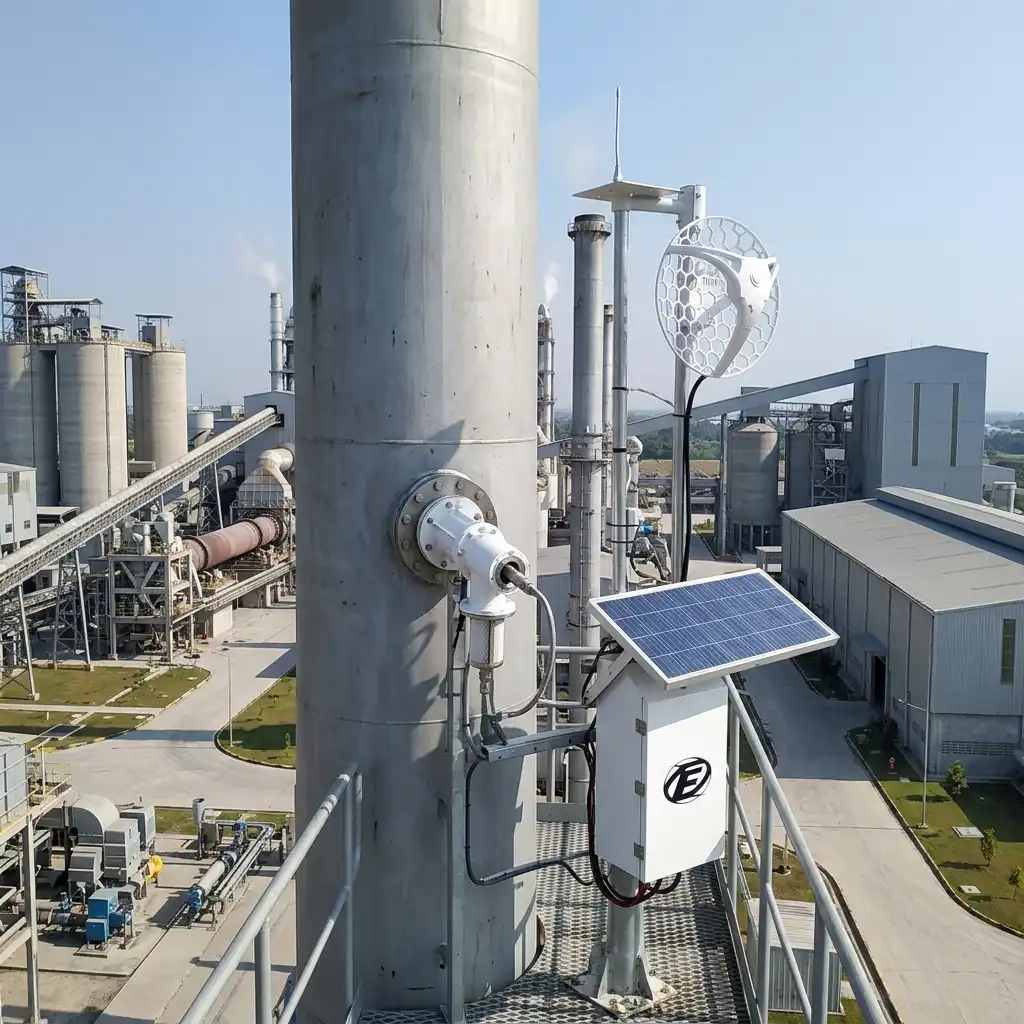
A large cement plant in East Java nearly lost its operating permit. The cause was not an explosion or workplace accident. A failing Cement CEMS infrastructure stopped transmitting emission data to the KLHK server for 72 consecutive hours. Particulate and SO2 readings vanished from the national monitoring platform. The environmental authority immediately issued a severe warning letter.
This case study reveals how the factory recovered. Management replaced the entire emission monitoring infrastructure. The result? A dramatic jump in its PROPER environmental rating within the very next assessment cycle.
Why Cement Factories Must Deploy Cement CEMS
The cement industry generates some of the highest smokestack emissions among all manufacturing sectors. The clinker burning process continuously produces particulate matter, SO2, NOx, and CO. Under Minister of Environment Regulation (PermenLHK) No. 19/2017, cement plants must monitor all these parameters.
Furthermore, PermenLHK No. 13/2021 mandates direct data integration between Cement CEMS devices and the SISPEK platform operated by KLHK. Every second of emission data must transmit in real-time. A connectivity failure lasting beyond 24 hours triggers a “Non-Compliant” status.
Financial Risks Without a Proper Cement CEMS System
Administrative sanctions represent only the beginning. Government Regulation (PP) No. 22/2021 authorizes fines of up to IDR 3 billion (approximately USD 190,000) per violation. Additionally, PermenLHK No. 14/2024 strengthens the mechanism for revoking operating permits entirely.
Reputational damage carries equally severe consequences. A poor PROPER rating erodes trust among business partners. ESG-focused investors increasingly avoid entities with negative environmental track records.
Case Study Timeline: A Cement Plant in East Java
Initial Conditions Before Deploying New Cement CEMS
The factory operated four primary smokestacks. Two large kilns and two coal mills supported a daily output of 8,000 tons of clinker. The legacy CEMS equipment relied on analog sensors that had exceeded eight years of service.
The core problem centered on data connectivity. An outdated datalogger failed to transmit readings to the SISPEK server consistently. The downtime frequency reached 40% across the final quarter of operation.
The Breaking Point: A Warning Letter from KLHK
An inspection team from KLHK discovered significant data inconsistencies during the annual PROPER audit. Particulate records showed critical gaps. Three out of four smokestacks lacked continuous data during the evaluation period.
Consequently, the plant received a PROPER Red rating. A second warning letter included the threat of temporary operational shutdown. Senior management immediately assembled an emergency task force.
The Solution: Cement CEMS Integration by Fortuna Argatech
Vendor Selection and Technical Specifications
The task force evaluated four domestic CEMS vendors. Fortuna Argatech earned selection based on three decisive criteria. First, proven capability for direct SISPEK integration with KLHK servers. Second, equipment durability in high-temperature industrial environments. Third, responsive post-installation technical support.
The Cement CEMS system from Fortuna Argatech included several critical components:
- Laser scatter particulate sensors with high accuracy for cement dust
- SO2 and NOx gas sensors using electrochemical cell technology
- GEOVOS 1000 datalogger with 4G connectivity and satellite backup
- Solar panels as supplementary power during electrical blackouts
Installation Across Four Smokestacks
The technical team from Fortuna Argatech completed installation within 14 working days. Each smokestack received one sampling probe unit and one analyzer cabinet. The process caused zero disruption to production schedules.
The installation stages included:
- Site survey of smokestack conditions and sampling port placement
- Probe mounting and initial sensor calibration
- GEOVOS 1000 datalogger configuration and SISPEK connection
- Seven consecutive days of data validation testing
Cement CEMS Connectivity Test Results to SISPEK
During the trial period, the data transmission success rate reached 99.7%. Only three minor disruptions occurred due to signal fluctuations. However, the auto-reconnect feature on the GEOVOS 1000 datalogger restored connectivity within minutes.
Emission data for all parameters transmitted every 2 minutes. The data format complied with the latest SISPEK protocol specifications. The KLHK team verified technical compliance without any negative observations.
Measurable Impact After Cement CEMS Implementation
PROPER Rating Improvement
In the following PROPER cycle, the factory achieved a Blue rating. The leap from Red to Blue signified full compliance with all emission regulations. Management now targets a Green rating in the subsequent cycle.
Operational Efficiency and Cost Savings
Real-time data from the Cement CEMS delivered unexpected operational benefits. The operations team optimized kiln fuel ratios based on actual emission trends. As a result, coal consumption decreased by approximately 3% within the first six months.
Moreover, manual testing costs dropped significantly. Previously, the factory spent hundreds of millions of rupiah annually on third-party emission testing laboratory services. The automated CEMS system replaced the majority of those requirements.
Legal Security and Stakeholder Confidence
With transparent and continuous emission data, the factory no longer faced sanction threats. Annual environmental reports became far more credible. Several international business partners even increased contract volumes after observing the demonstrated environmental commitment.
FAQ
What emission parameters must cement factories monitor using CEMS?
Under PermenLHK No. 19/2017, cement plants must monitor particulate matter (PM), sulfur dioxide (SO2), nitrogen oxides (NOx), and flow rate. Factories using Refuse Derived Fuel (RDF) must also monitor carbon monoxide (CO).
What is the maximum penalty for cement factories failing to operate CEMS according to regulations?
PP No. 22/2021 and PermenLHK No. 14/2024 authorize administrative fines up to IDR 3 billion per violation. Beyond fines, authorities can revoke the factory’s operating permit entirely.
What is SISPEK and how does it relate to Cement CEMS?
SISPEK (Continuous Industrial Emission Monitoring Information System) is a platform operated by KLHK. All data from a cement factory’s CEMS must transmit to SISPEK in real-time without interruption.
How long does it take to install a Cement CEMS system from Fortuna Argatech?
Installation duration depends on the number of smokestacks. For four smokestacks, the Fortuna Argatech technical team completes mounting and calibration within approximately 14 working days without halting production.
Can CEMS data serve purposes beyond regulatory compliance?
Real-time emission data proves highly valuable for production process optimization. Operations teams can adjust kiln combustion parameters based on actual emission trends, thereby reducing fuel consumption.
Sources
- Ministry of Environment and Forestry (KLHK) — PermenLHK No. 13/2021 on SISPEK
- PermenLHK No. 19/2017 on Cement Industry Emission Standards
- Government Regulation (PP) No. 22/2021 on Environmental Protection and Management
- PermenLHK No. 14/2024 on Environmental Administrative Sanctions
- Fortuna Argatech — https://argatech.com
Share this article
Share this insight with your team.
Related Articles
Similar topics from the same category.
Discover how a PDAM Turbidity Sensor saved a water treatment facility from distributing muddy water during extreme floods. A Fortuna Argatech solution.
Discover how a Palm Oil SPARING Sensor saved a massive factory from devastating pollution fines. A telemetry solution by Fortuna Argatech.
Sudden dam water overflows frequently trigger terrifying deadly flash flood disasters. Discover exactly how a Dam AWLR Sensor successfully rescued thousands of innocent downstream civilian lives.